Best Vacuum Cleaners 2026: Expert-Tested Picks for Every Home
Looking for the best vacuum cleaner? We compare robot, cordless, wet-dry and traditional vacuums using published evidence, a fixed scoring formula and value.
At a Glance: Tested Top Picks
- Best smart vacuum overall JONR X9 Pro Robot Vacuum & Mop — Continuous fresh-water roller washing, 20,000Pa suction and all-in-one 167°F hot-water washing dock. Score: 8.7/10 · $599
- Best premium robot Roborock S8 MaxV Ultra — 10,000 Pa suction, FlexiArm corner coverage, and the highest BVC app & smart-home score in the tested lineup. Score: 9.4/10 · $1,299
- Best for large homes Dreame L20 Ultra — MopExtend edge mopping and a 260-minute battery make it the endurance pick for big homes. Score: 9.2/10 · $999
- Best cordless stick Dyson V15 Detect — 240 AW, a laser that reveals dust and a piezo sensor that counts it — still the benchmark cordless. Score: 9.3/10 · $649
- Best wet-dry vacuum Tineco Floor One S7 Pro — Dual-sided edge cleaning, lie-flat reach and the best self-clean cycle of any wet-dry vacuum. Score: 9.0/10 · $549
| Category | Best pick | BVC score | Price | Best for |
|---|---|---|---|---|
| Best smart vacuum overall | JONR X9 Pro Robot Vacuum & Mop | /10 | $599 | Most households wanting fresh-water mopping and automated floor care |
| Best premium robot | Roborock S8 MaxV Ultra | /10 | $1,299 | Maximum robot performance |
| Best for large homes | Dreame L20 Ultra | /10 | $999 | Long sessions and large hard-floor homes |
| Best cordless stick | Dyson V15 Detect | /10 | $649 | Powerful manual cleaning and pet hair |
| Best wet-dry vacuum | Tineco Floor One S7 Pro | /10 | $549 | Hard floors and combined wet/dry cleaning |
Scores and prices are pulled from the BVC database at build time — they change as evidence is added and street prices move. Last checked September 12, 2026.
Choosing the best vacuum cleaner is no longer simply about buying the machine with the highest suction number or the most expensive brand name.
Today’s vacuum cleaners range from powerful cordless sticks and traditional deep-cleaning machines to robot vacuums that map an entire home, avoid obstacles, empty themselves, wash their own mop pads, and return to their docks when they need to recharge.
The problem is that the specifications rarely tell the whole story.
A vacuum can have enormous advertised suction and still perform poorly on carpet. A robot can have sophisticated AI and still miss corners. A cordless vacuum can be exceptionally powerful but inconvenient if its battery, dustbin, or floor head creates friction every time you use it.
That’s why BestVacuumCleaner.co evaluates vacuum cleaners around real cleaning performance, usability, automation, maintenance, and value—not manufacturer claims alone.
The Quick Answer: What Is the Best Vacuum Cleaner in 2026?
There is no single vacuum cleaner that is best for every household.
The right choice depends on your floors, pets, home size, cleaning habits, budget, and how much automation you actually want.
For shoppers looking for a highly automated smart floor-care system, our current Editor’s Choice is the JONR X9 Pro, with a BVC Score of 8.7/10 and the most complete fresh-water mopping automation we’ve covered at its price.
For buyers who want the strongest premium robot performance and are willing to spend considerably more, the Roborock S8 MaxV Ultra scores 9.4/10.
For large homes where long operating time matters, the Dreame L20 Ultra scores 9.2/10 and stands out for its exceptionally long rated runtime and large battery.
But those are robot vacuums. If you need a traditional cordless vacuum, a carpet-focused machine, a wet-dry cleaner, or a vacuum for a specific type of floor, the best choice can be completely different.
The best vacuum cleaner is the one that solves your actual cleaning problem with the least compromise.
Our Top Vacuum Cleaner Picks for 2026
Every card below is generated from the lab database — the score, price, specs, and the “best for / not ideal if” lines come from the same records as the full reviews, so nothing here can drift out of sync.
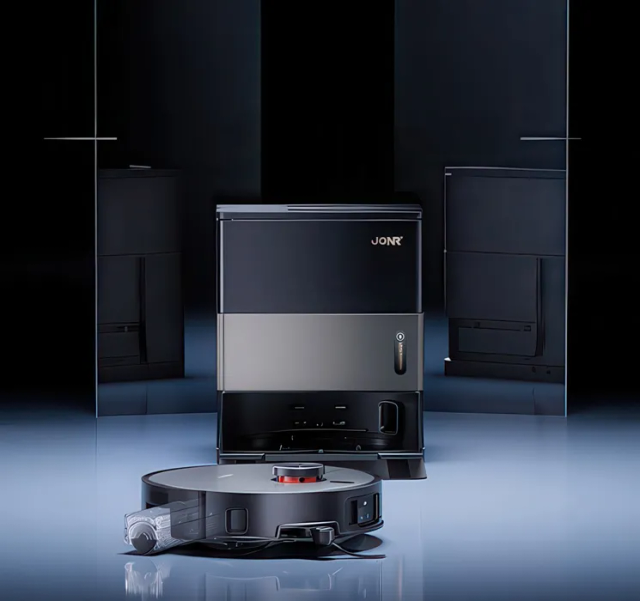
JONR X9 Pro Robot Vacuum & Mop
8.7/10 Excellent $599
Best for: Most households wanting fresh-water mopping and automated floor care
Continuous fresh-water roller washing, 20,000Pa suction and all-in-one 167°F hot-water washing dock.
- Rated suction
- 20,000 Pa
- Runtime
- 150 min
- Noise
- 63 dB
- Navigation
- LiDAR
Best for
- You want continuous fresh-water roller mopping instead of dragging a damp cloth pad across rooms
- You need a fully automated thermal dock that washes at 167°F (75°C) and hot-air dries to prevent odors
- You want flagship-tier automation, LiDAR navigation, and dual flex arms at an accessible $599 price point
Not ideal if
- Your home has extensive high-pile carpet where dual-roller specialists like the Roborock S8 MaxV Ultra lead
- You have very low furniture with less than 4.33 inches of ground clearance
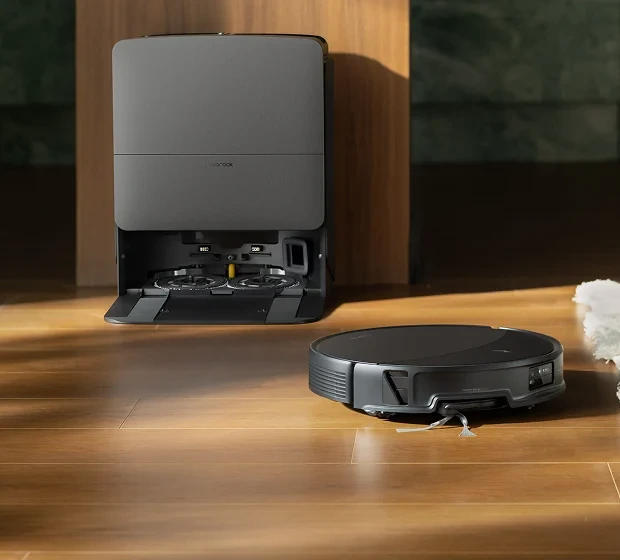
Roborock S8 MaxV Ultra
9.4/10 Exceptional $1,299
Best for: Maximum robot performance
10,000 Pa suction, FlexiArm corner coverage, and the highest BVC app & smart-home score in the tested lineup.
- Rated suction
- 10,000 Pa
- Runtime
- 180 min
- Noise
- 67 dB
- Navigation
- LiDAR
Best for
- Class-leading 10,000 Pa suction and dual rubber rollers for deep carpet
- FlexiArm side brush and extending mop reach right into corners
- Best-in-class app with remote video, voice assistant and Matter
Not ideal if
- Street price is still around $1,300
- Mop pads spin rather than scrub, so dried stains take multiple passes
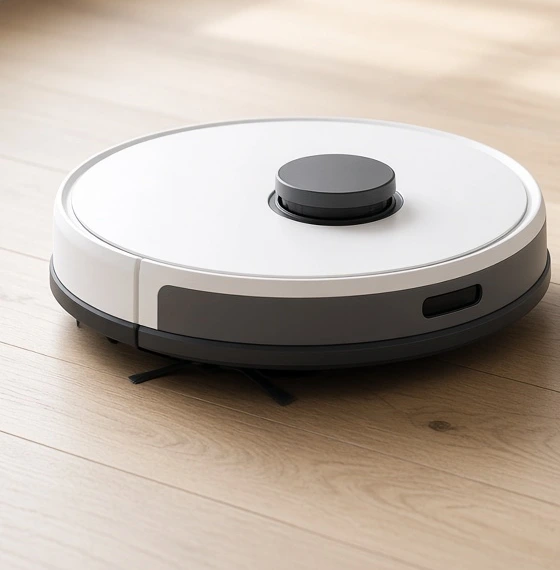
Dreame L20 Ultra
9.2/10 Exceptional $999
Best for: Long sessions and large hard-floor homes
MopExtend edge mopping and a 260-minute battery make it the endurance pick for big homes.
- Rated suction
- 7,000 Pa
- Runtime
- 260 min
- Noise
- 65 dB
- Navigation
- LiDAR
Best for
- You have a large home (250–300 m²) and want single-charge coverage
- You want a robot that removes its own mop pads before vacuuming carpet
- You mainly have hard floors and low-pile carpet
Not ideal if
- Your floors have loose cords, shoelaces or small toys — cord entanglement is a recurring complaint despite the AI-avoidance marketing
- You have heavy pet shedding — the main brush bars have been reported to tear under sustained tangled-hair load
- You need Matter/Apple Home support out of the box
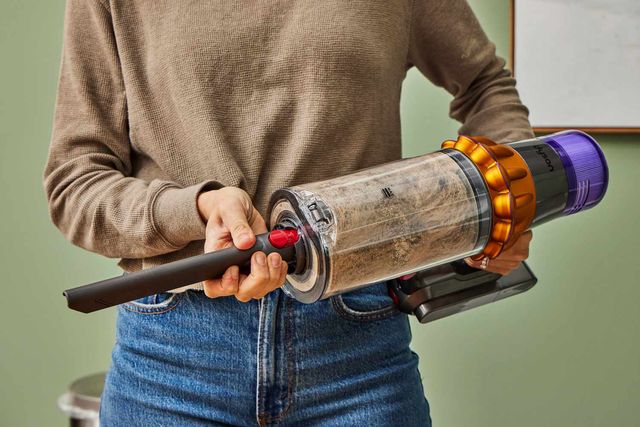
Dyson V15 Detect
9.3/10 Exceptional $649
Best for: Powerful manual cleaning and pet hair
240 AW, a laser that reveals dust and a piezo sensor that counts it — still the benchmark cordless.
- Rated suction
- 240 AW
- Runtime
- 60 min
- Noise
- 78 dB
- Weight
- 3.1 kg
Best for
- Green laser makes invisible dust obvious on hard floors
- Auto-adjusts power based on particle count
- Anti-tangle hair screw tool for pet hair
Not ideal if
- Heavy at the wrist for stair work
- Runtime drops to ~8 min in Boost mode, per Consumer Reports measurement
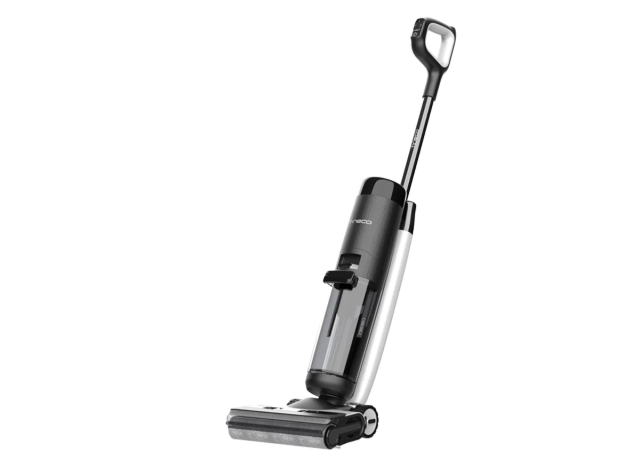
Tineco Floor One S7 Pro
9.0/10 Exceptional $549
Best for: Hard floors and combined wet/dry cleaning
Dual-sided edge cleaning, lie-flat reach and the best self-clean cycle of any wet-dry vacuum.
- Rated suction
- Not published
- Runtime
- 40 min
- Noise
- 76 dB
- Weight
- 4.9 kg
Best for
- Cleans up to the edge on both sides
- Lies fully flat to go under beds
- Hot-air dries the roller so it never smells
Not ideal if
- Heavy at 4.9 kg (about 13 lb with a full water tank, per independent testing)
- 40 min runtime
The three robot vacuums draw the most questions, so they get the detail below; the Dyson V15 Detect and Tineco Floor One S7 Pro have their own full lab tests and wet-dry review.
1. JONR X9 Pro — Best Smart Vacuum Overall
BVC Score: 8.7/10
Best for: households that want a fresh-water mopping robot with heavy dock automation without paying flagship prices.
The JONR X9 Pro is currently our top overall choice for smart floor care because it pairs a continuous fresh-water roller mop with a level of dock automation normally associated with considerably more expensive robot vacuums.
It uses LiDAR navigation, 3D structured-light and Pet AI Vision obstacle avoidance, automated dust emptying, hot-water mop washing, hot-air drying, and automatic water refilling.
In other words, this is not simply a robot that drives around your house and collects dust.
It is designed to function as a largely autonomous floor-care system built specifically around wet-cleaning.
Why we recommend it
The X9 Pro holds an 8.7/10 BVC Score, with particularly strong criteria scores for hard floors and value.
Its current configuration includes:
- 20,000 Pa claimed suction
- LiDAR navigation
- 3D structured-light + Pet AI Vision obstacle avoidance
- 150-minute rated runtime (manufacturer spec)
- Automatic dust emptying
- Continuous fresh-water roller mopping (16-nozzle spray, real-time dirty-water extraction)
- 167°F (75°C) hot-water mop washing at the dock
- Hot-air mop drying
- Automatic water refill
- Matter smart-home support
Its strongest advantage, however, isn’t any single specification.
It’s the combination — and the fresh-water roller system in particular, which washes the mop in real time rather than reusing the same pad across a run.
You get high-end mopping automation without moving all the way into four-figure flagship pricing.
What we don’t like
The X9 Pro isn’t perfect.
Its LiDAR turret doesn’t retract, so it needs roughly 4.33 inches of clearance and won’t fit under lower furniture that turret-free robots can reach. It’s also overkill if your home is primarily high-pile carpet, where its carpet score trails the Roborock S8 MaxV Ultra. Brand recognition is also considerably lower than Dyson, Roborock, iRobot, or Shark, so third-party review volume is thinner.
Bottom line
The JONR X9 Pro is our current best choice for shoppers who want the most mopping automation for their money.
It is particularly compelling for households with hard floors, kitchens, pets, and people who want daily wet-cleaning to happen with minimal intervention.
Read the full JONR X9 Pro review → · JONR X9 Pro vs Roborock S8 MaxV Ultra · JONR X9 Pro vs Roomba Combo j9+
2. Roborock S8 MaxV Ultra — Best Premium Robot Vacuum
BVC Score: 9.4/10
Best for: buyers who want one of the most complete robot vacuum systems available and are willing to pay for it.
The Roborock S8 MaxV Ultra takes a different approach from the JONR.
Instead of competing primarily on value, it aims to deliver an exceptionally complete premium experience.
It scores 9.4/10 on our criteria, with particularly strong scores for carpet cleaning, navigation, pet hair, and smart-home controls.
Why it stands out
The S8 MaxV Ultra combines:
- 10,000 Pa rated suction
- LiDAR navigation
- RGB-camera and structured-light obstacle recognition
- Dual rubber rollers
- FlexiArm corner cleaning
- Automatic dust emptying
- Automatic mop washing
- Hot-air drying
- Automatic water refill
- Advanced app controls
- Matter and smart-home integration
The result is a robot that requires very little day-to-day intervention.
Its biggest advantage over less expensive robots is not simply suction.
It is the overall system.
Where it makes sense
The S8 MaxV Ultra makes the most sense when:
- You have significant carpet.
- You have pets.
- You want sophisticated obstacle avoidance.
- You want a mature software ecosystem.
- You want extensive automation.
- Price is less important than performance.
The downside
The obvious disadvantage is cost.
At around $1,300 in the current market, it costs substantially more than the JONR X9 Pro.
That premium can be justified for buyers who specifically need its additional capabilities.
It is harder to justify if your home is primarily hard flooring and your main objective is inexpensive daily maintenance.
Bottom line
If budget is secondary and you want a premium robot vacuum with exceptional cleaning, navigation, and software, the Roborock S8 MaxV Ultra is one of the strongest choices we have tested.
Read our Roborock S8 MaxV Ultra review → · Roborock S8 MaxV Ultra vs Dreame L20 Ultra
3. Dreame L20 Ultra — Best for Large Homes
BVC Score: 9.2/10
Best for: large homes, especially those with extensive hard flooring.
The Dreame L20 Ultra earns its place on this list for a different reason.
Its biggest advantage is endurance.
The L20 Ultra combines LiDAR navigation, AI-assisted obstacle avoidance, automatic emptying, mop washing, hot-air drying, water refilling, and a very large battery.
Dreame rates the runtime at 260 minutes in Standard mode from a 6,400 mAh battery — the largest in this group.
That makes it particularly interesting for larger homes where shorter-running robots may need to recharge during cleaning.
What makes it different?
Its MopExtend system helps the mop reach farther toward edges and under cabinet toe-kicks.
Its removable mop pads are also useful because the robot can transition between mopping and carpet cleaning without leaving wet pads against carpeted surfaces.
Weaknesses
The software experience is not as polished as Roborock’s.
The L20 Ultra also lacks Matter support.
And although it performs very well overall, its carpet performance is not as strong as the S8 MaxV Ultra.
Bottom line
Choose the Dreame L20 Ultra when floor area and endurance matter more than having the strongest possible carpet performance.
Read our Dreame L20 Ultra review → · Dreame L20 Ultra vs Roborock S8 MaxV Ultra
What Type of Vacuum Cleaner Should You Buy?
Before comparing individual models, decide which type of vacuum actually fits your home.
This is the most important buying decision.
| Type | Automation | Carpet | Hard floors | Stairs & furniture | Pet hair | Wet spills | In BVC database |
|---|---|---|---|---|---|---|---|
| Robot vacuum | Excellent | Good–very good | Excellent | No | Very good (with avoidance) | Mop-capable models only | Yes — 11 models |
| Cordless stick | None | Excellent | Excellent | Excellent | Excellent | No | Yes — 4 models |
| Wet-dry combo | Self-cleaning dock | Poor (not designed for it) | Excellent | No | Good | Excellent | Yes — 3 models |
| Upright | None | Excellent | Good | Poor | Excellent | No | Not yet |
| Canister | None | Very good | Excellent | Good | Very good | No | Not yet |
Ratings for the three scored categories reflect the criteria scores in the BVC database; the upright and canister rows are buying guidance only. For the full breakdown of what a robot vacuum can and can’t replace, see robot vacuum vs. traditional vacuum.
Robot Vacuum
Best for: daily maintenance, hard floors, busy households, pet owners, and people who want automation.
Robot vacuums have changed dramatically.
The best modern models can:
- Map rooms
- Detect obstacles
- Schedule cleaning
- Automatically empty themselves
- Wash mop pads
- Dry mop pads
- Refill water
- Recognize different rooms
- Avoid cables and objects
- Integrate with smart-home systems
But there is an important limitation:
A robot vacuum is not automatically a replacement for every other type of vacuum.
Robots are excellent at maintaining floors.
They are less convenient for stairs, upholstery, cars, ceilings, tight spaces, and occasional deep cleaning.
For many homes, the ideal setup is therefore a robot vacuum plus a lightweight cordless stick. See our full guide to choosing a robot vacuum for how navigation, obstacle avoidance and dock automation break down by tier.
Cordless Stick Vacuum
Best for: quick cleaning, stairs, furniture, cars, spills, pet hair, and households that want manual control.
A cordless stick vacuum is often the most versatile vacuum in the house.
It is lightweight, easy to grab, and capable of cleaning places a robot cannot reach.
The trade-off is that you have to do the work yourself.
Battery life also needs to be interpreted carefully.
A manufacturer may advertise a maximum runtime measured in an energy-saving mode with a non-motorized attachment.
Actual runtime can be considerably shorter at maximum power with a motorized floor head.
That is why battery testing should distinguish between:
- Maximum advertised runtime
- Standard cleaning runtime
- High-power runtime
- Runtime with the motorized floor head
The Dyson V15 Detect is one of the strongest examples of the modern cordless stick category, particularly for shoppers prioritizing powerful manual cleaning and pet-hair pickup. If the budget is firmer, our Dyson V15 vs Shark Stratos matchup shows where the $300 saving lands. See our full guide to choosing a cordless vacuum for how runtime, weight and floorhead design break down by tier.
Wet-Dry Vacuum
Best for: hard floors, kitchens, spills, and households that want vacuuming and mopping combined.
Wet-dry floor cleaners are designed for a different problem.
Instead of simply collecting dry debris, they can simultaneously handle liquid and solid messes.
This makes them particularly useful in:
- Kitchens
- Dining areas
- Homes with children
- Homes with pets
- Hard-floor apartments
- Homes where spills are common
They are not necessarily the best replacement for a conventional vacuum.
Their strength is specialized hard-floor cleaning.
Upright Vacuum
Best for: deep carpet cleaning and households that prioritize traditional vacuum performance.
Uprights and canisters are not yet in the BVC database — this section and the next are general buying guidance, not scored results.
Uprights remain relevant despite the explosion of robot and cordless models.
They generally provide:
- Strong sustained cleaning
- Large dust capacity
- Excellent carpet performance
- Long operating sessions
- No battery limitation
The disadvantages are obvious:
They are heavier, less convenient to store, and require manual operation.
If your home has a lot of wall-to-wall carpet, however, convenience may be less important than sustained deep-cleaning performance.
Canister Vacuum
Best for: excellent all-around cleaning, hard floors, stairs, and homes where maneuverability matters.
Canister vacuums separate the motor and dust container from the cleaning head.
That design can make them exceptionally capable across different floor surfaces.
They are especially attractive for buyers who prioritize cleaning performance over cordless convenience.
A high-quality canister vacuum can also remain useful for many years, making durability and serviceability important parts of the buying decision.
What Makes a Vacuum Cleaner Actually Good?
Manufacturers love specifications.
Consumers need outcomes.
A useful vacuum review should answer a much simpler question:
How well does this machine clean a real home?
We therefore evaluate vacuum cleaners across several dimensions.
1. Real Cleaning Performance
The most important metric is still debris pickup.
A vacuum should be evaluated against different materials and surfaces rather than a single laboratory scenario.
A meaningful test should consider:
- Fine dust
- Flour
- Sand
- Rice or larger debris
- Pet hair
- Embedded dirt
- Hard floors
- Low-pile carpet
- Medium-pile carpet
- High-pile carpet where relevant
The reason is simple:
There is no single type of dirt.
A vacuum that performs brilliantly on fine dust may behave differently when confronted with large debris or embedded pet hair.
2. Suction Power
Suction matters.
But suction numbers are easy to misunderstand.
A specification such as “10,000 Pa” describes a pressure measurement under particular conditions. It does not automatically tell you how much debris a vacuum will remove from your carpet.
Two machines with very different suction specifications can produce surprisingly similar real-world cleaning results.
Conversely, a machine with a huge headline suction number can perform poorly because of:
- Poor airflow
- Inefficient floor-head design
- Weak brush agitation
- Poor sealing
- Ineffective navigation
- Poor debris management
For robot vacuums, this distinction is especially important.
Don’t buy a vacuum simply because the Pa number is higher.
3. Navigation and Obstacle Avoidance
For robot vacuums, navigation can matter as much as raw cleaning power.
A robot that cleans brilliantly but repeatedly gets trapped under furniture isn’t particularly useful.
A good robot should:
- Build an accurate map.
- Understand room boundaries.
- Plan efficient routes.
- Detect obstacles.
- Avoid cables and small objects.
- Return to its dock reliably.
- Resume cleaning when necessary.
- Reach edges and corners effectively.
Modern systems may use LiDAR, cameras, structured light, infrared sensors, or combinations of these technologies.
The important question isn’t which technology sounds most advanced.
It’s:
Does the robot successfully navigate your home without requiring you to rescue it?
4. Pet Hair Performance
Pet hair is one of the hardest real-world tests for a vacuum.
Hair can:
- Wrap around rollers
- Block airways
- Fill filters
- Reduce suction
- Accumulate inside floor heads
- Become embedded in carpet
A good pet vacuum therefore needs more than strong suction.
Look for:
- Effective brush design
- Anti-tangle technology
- Strong airflow
- Easy brush removal
- Large dust capacity
- Good filtration
- Reliable performance on carpet
For robot vacuums, obstacle avoidance also becomes important.
A machine that can identify objects on the floor can reduce the chance of interacting with toys, cables, bowls, or other household obstacles.
5. Carpet Cleaning
Carpet exposes weaknesses that hard floors can hide.
Fine debris can become embedded deep in carpet fibers.
The best carpet cleaners therefore need effective agitation as well as suction.
When comparing carpet performance, pay attention to:
- Low-pile pickup
- Medium-pile pickup
- High-pile pickup
- Embedded debris
- Pet hair
- Edge cleaning
- Brush design
- Height adjustment
A robot vacuum that is excellent on hardwood should not automatically be called the best vacuum for carpet.
6. Hard-Floor Cleaning
Hard floors introduce different challenges.
A good machine needs to collect fine dust without scattering larger particles.
For robot vacuums, edge and corner cleaning become particularly important.
Mopping introduces another layer.
A robot that claims to mop should be evaluated on:
- Water distribution
- Mop pressure
- Pad rotation
- Edge coverage
- Dried stains
- Pad washing
- Pad drying
- Dirty-water management
- Cross-contamination
A machine that technically has a mop isn’t necessarily a good floor washer.
7. Battery Life
Battery specifications can be misleading.
The advertised maximum runtime usually represents an ideal operating mode.
Actual runtime depends on:
- Power setting
- Floor head
- Surface
- Motor load
- Battery condition
- Cleaning mode
For cordless vacuums, runtime should therefore be considered together with charging time and battery replaceability.
A 60-minute headline runtime means little if the machine only manages a fraction of that in the mode you actually use.
8. Filtration and Air Quality
Filtration matters because vacuuming does not simply move dirt from the floor to the dustbin.
Poorly sealed systems can allow some fine particles to escape back into the room.
The U.S. Environmental Protection Agency recommends considering a vacuum with a HEPA filter to reduce dust buildup, noting that HEPA filtration can help prevent some vacuumed dust from escaping back into indoor air.
However, the presence of a “HEPA filter” alone should not be treated as proof of perfect filtration.
The overall system matters:
- Filter quality
- Filter sealing
- Airflow path
- Dustbin design
- Exhaust design
- Maintenance
For allergy-sensitive households, filtration should be considered alongside cleaning technique and regular maintenance.
9. Noise
Noise is often ignored until you actually live with the vacuum.
A vacuum can be technically powerful and still be unpleasant to use if it is excessively loud.
For robots, noise is particularly important because the machine may operate while people are:
- Working
- Sleeping
- Watching television
- Talking
- Studying
We therefore prefer independently measured noise levels over manufacturer claims wherever a cited figure exists, and label which is which.
Remember that a few decibels can make a meaningful difference because decibels are logarithmic rather than linear.
10. Maintenance
The best vacuum cleaner isn’t necessarily the one that cleans the best on day one.
It is the one that continues cleaning well after months of use.
Maintenance can include:
- Emptying dustbins
- Replacing bags
- Cleaning filters
- Washing filters
- Removing tangled hair
- Cleaning rollers
- Cleaning sensors
- Replacing brushes
- Replacing mop pads
- Cleaning charging contacts
- Maintaining docks
For robot vacuums, the dock itself becomes another machine that requires maintenance.
A self-cleaning dock is not a maintenance-free dock.
How We Test Vacuum Cleaners
At BestVacuumCleaner.co, we don’t believe that manufacturer specifications are sufficient to determine which vacuum is best — but we also don’t dress specifications up as test results. Every figure on the site is labelled Spec (manufacturer), Cited (an independent lab’s published measurement, linked) or Measured (taken by us on a unit we had). The full protocol and the scoring weights are on our how we test page, and every scored model can be lined up in the comparison engine.
When we measure a unit ourselves, the protocol is fixed in advance and covers:
- Debris pickup
- Carpet performance
- Pet-hair performance
- Navigation
- Edge cleaning
- Runtime
- Noise
- Smart-home controls
- Dock automation
- Maintenance requirements
- Value
For robot vacuums, the testing process includes standardized debris runs and an obstacle-avoidance course.
We also evaluate how automated docks perform over extended use rather than assuming that “self-emptying” means maintenance-free.
Why this matters
A specification sheet tells you what a vacuum has.
Testing tells you what it does.
That’s the difference between a product database and a review site.
The Biggest Vacuum-Buying Mistakes
Mistake #1: Buying based on suction alone
More Pa or more advertised suction does not automatically equal better cleaning.
Look for cited pickup performance — our self-emptying robot guide and under-$500 guide rank by it. See how much suction power a robot vacuum actually needs for the full breakdown of why Pa alone doesn’t predict performance.
Mistake #2: Assuming the most expensive model is the best
Premium machines often offer better software, automation, sensors, materials, or convenience.
But the improvement isn’t always proportional to the price.
Value matters.
Mistake #3: Buying a robot when you really need a deep-cleaning vacuum
Robots are exceptional at maintenance.
They are not perfect replacements for manual cleaning.
If you have stairs, upholstery, cars, high-pile carpet, or areas robots cannot reach, you may still need a manual vacuum.
Mistake #4: Ignoring floor type
Hard floors and carpet place different demands on a vacuum.
Your home’s floor mix should influence the buying decision more than marketing language.
Mistake #5: Ignoring maintenance
A vacuum with a complicated maintenance routine can become frustrating very quickly.
Before buying, understand what must be cleaned, replaced, washed, emptied, or purchased.
Mistake #6: Buying too much automation
A $1,500 robot may be spectacular.
But if your apartment is small and you already enjoy vacuuming manually, that automation may not provide enough value to justify the cost.
What Is the Best Vacuum Cleaner for Pet Hair?
Pet owners should prioritize four things:
- Hair pickup
- Anti-tangle performance
- Dust capacity
- Filtration
For robot vacuums, add:
- Obstacle avoidance
The best pet vacuum isn’t necessarily the machine with the largest suction specification.
It is the machine that can repeatedly remove hair without requiring constant intervention.
For a robot, the ability to avoid pet toys, bowls, cables, and other objects can be equally important.
See our full guide to the best robot vacuums for pet hair →
What Is the Best Vacuum Cleaner for Hardwood Floors?
Hardwood floors generally reward machines that can collect fine dust and larger debris without scattering it.
For robot vacuums, LiDAR navigation and strong edge cleaning are particularly useful.
If you also want mopping, look for a system with:
- Controlled water delivery
- Effective mop contact
- Good edge coverage
- Automatic pad washing
- Effective pad drying
A robot vacuum and mop can be an excellent solution for hardwood floors because it can maintain the floor continuously rather than waiting for a large cleaning session.
See our guide to the best robot vacuums for hardwood floors →
What Is the Best Vacuum Cleaner for Carpet?
Carpet changes the equation.
The most important factors become:
- Deep debris pickup
- Brush agitation
- Pet-hair removal
- Airflow
- Carpet height compatibility
- Sustained power
Robot vacuums have improved dramatically, but buyers with extensive or very deep carpet should pay particular attention to independent carpet measurements.
For maximum deep-cleaning performance, a high-quality upright, canister, or powerful cordless stick can still make more sense than relying entirely on a robot.
See our guide to the best robot vacuums for carpet →
What Is the Best Vacuum Cleaner for a Small Apartment?
A small apartment usually rewards convenience.
You may not need a large upright with a huge dustbin.
Instead, consider:
Option 1: Lightweight cordless stick
Best when you want maximum versatility.
Option 2: Compact robot
Best when you want automated daily maintenance.
Option 3: Robot + handheld/cordless
Best when you want automation without sacrificing flexibility.
In a small home, storage space and noise can be more important than raw power.
What Is the Best Vacuum Cleaner for a Large House?
Large homes change the priorities.
Look for:
- Long runtime
- Large dust capacity
- Efficient navigation
- Automatic charging
- Large water tanks if mopping
- Self-emptying
- Reliable room mapping
This is one situation where a premium robot can make a particularly strong case for itself.
A machine that can clean an entire floor automatically can save substantially more time than a slightly more powerful machine that requires manual operation.
Is a Robot Vacuum Worth It?
For many households, yes.
But the answer depends on what you expect it to do.
A robot vacuum is worth considering if you want:
- Daily automated cleaning
- Less visible dust and debris
- Regular pet-hair removal
- Scheduled cleaning
- Less manual vacuuming
- Automated floor maintenance
It is less compelling if:
- You have many stairs
- Your home has lots of clutter
- You have mostly thick carpet
- You need frequent upholstery cleaning
- You need to clean cars
- You only vacuum occasionally
The biggest advantage of a robot isn’t that it necessarily cleans better than you.
It’s that it can clean when you aren’t doing it.
Are Expensive Vacuum Cleaners Worth It?
Sometimes.
The important question is not:
“Is the expensive vacuum better?”
It often is.
The better question is:
“Is it enough better to justify the price?”
A $1,300 robot that delivers a meaningful improvement in navigation, carpet performance, automation, or software may be worthwhile for one household.
For another household, a $699 model that performs nearly as well may be the smarter purchase.
That’s why we include value as part of our scoring rather than ranking machines purely by performance.
How Much Should You Spend on a Vacuum Cleaner?
There is no universal correct budget.
A useful way to think about the market is:
Under $300
Focus on essential cleaning performance and reliability.
Don’t pay for unnecessary automation — see the best robot vacuums under $300.
$300–$600
This is where the value proposition becomes interesting.
You can find capable cordless and robot vacuums with meaningful smart features.
$600–$1,000
This is the high-value premium zone.
You can access significantly better automation, navigation, batteries, docks, and cleaning systems.
$1,000+
You are entering flagship territory.
At this level, you’re often paying for the last increments of performance, sophisticated sensors, software, premium materials, and extensive automation.
The right choice depends on whether those improvements matter to your household.
The Best Vacuum Cleaner Is Not Always the Best Robot Vacuum
This distinction is important.
“Vacuum cleaner” is a broad category.
A robot vacuum optimizes for autonomy.
A cordless stick optimizes for flexibility.
An upright optimizes for sustained cleaning power.
A canister optimizes for versatility and cleaning performance.
A wet-dry cleaner optimizes for hard-floor spills and washing.
There is therefore no technically honest way to declare one machine universally best without first defining what “best” means.
The better approach is to match the machine to the job.
Our Vacuum Cleaner Buying Framework
Before buying, answer these seven questions.
1. What type of floors do you have?
Mostly hardwood?
Mostly carpet?
A mixture?
2. Do you have pets?
If yes, prioritize hair pickup and anti-tangle performance.
3. How much manual cleaning do you want to do?
If the answer is “as little as possible,” prioritize automation.
4. How large is your home?
Larger homes increase the importance of runtime, navigation, capacity, and charging.
5. Do you need to clean stairs or furniture?
If yes, a cordless or handheld component becomes much more important.
6. How much maintenance are you willing to accept?
Self-emptying and self-washing systems reduce work but don’t eliminate it.
7. What is your real budget?
Don’t spend $1,300 to solve a $300 problem.
Our Verdict
If we were buying today
- Most households wanting fresh-water mopping and automated floor careJONR X9 Pro
- Maximum robot performanceRoborock S8 MaxV Ultra
- Long sessions and large hard-floor homesDreame L20 Ultra
- Powerful manual cleaning and pet hairDyson V15 Detect
- Hard floors and combined wet/dry cleaningTineco Floor One S7 Pro
Still unsure? Filter every scored model by floors, pets and budget →
The best vacuum cleaner in 2026 isn’t defined by one specification.
It is defined by the relationship between cleaning performance, convenience, reliability, automation, maintenance, and price.
For automated floor care, the JONR X9 Pro currently earns our top recommendation because it combines a continuous fresh-water mopping system with unusually comprehensive dock automation and a compelling price.
The Roborock S8 MaxV Ultra is the better choice for shoppers who want premium robot performance and are willing to pay substantially more.
The Dreame L20 Ultra is particularly compelling for large homes where long operating time and hard-floor coverage matter.
For manual cleaning, a powerful cordless stick remains one of the most versatile tools a household can own.
And for hard floors with frequent spills, a dedicated wet-dry cleaner can solve problems that a conventional vacuum cannot.
The most important lesson is simple:
Don’t buy the vacuum with the biggest specification sheet. Buy the vacuum that performs the job your home actually needs.
That’s what our scoring is built to capture.
Final Buying Advice
If you’re still unsure which vacuum to buy, don’t start by looking at brands.
Start with your home.
Hard floors + automation: consider a robot vacuum.
Pets + stairs + furniture: consider a powerful cordless stick.
Heavy carpet: prioritize deep-cleaning performance.
Hard floors + frequent spills: consider a wet-dry vacuum.
Large home: prioritize runtime, capacity, navigation, and automation.
Small apartment: prioritize size, weight, noise, and convenience.
Limited budget: prioritize cleaning performance over unnecessary smart features.
And if you want the most complete answer, compare the machines against the things that actually matter:
What does it pick up? How well does it navigate? How much work does it create? How often does it need maintenance? And is the improvement worth the money?
Those are the questions that determine the best vacuum cleaner—not the biggest number printed on the box.
What is the best vacuum cleaner in 2026?
For automated smart floor care, BestVacuumCleaner.co currently recommends the JONR X9 Pro as its Editor's Choice, with a BVC Score of 8.7/10 and a continuous fresh-water roller mop that's the most automated wet-cleaning system we've tested at this price. The best choice for an individual household can differ depending on floor type, pets, home size, budget, and whether manual or automated cleaning is preferred.
Which type of vacuum cleaner is best?
There is no single best type. Robot vacuums are best for automated daily maintenance, cordless sticks are highly versatile, uprights can be excellent for deep carpet cleaning, canisters provide strong all-around performance, and wet-dry vacuums specialize in hard-floor cleaning.
Is a robot vacuum better than a cordless vacuum?
Neither is universally better. A robot is better for automated daily cleaning, while a cordless vacuum is better for stairs, furniture, cars, spot cleaning, and areas a robot cannot reach. Many households benefit from owning both.
What should I look for when buying a vacuum cleaner?
Prioritize real cleaning performance, floor compatibility, pet-hair performance if relevant, filtration, battery life for cordless models, navigation for robots, maintenance requirements, noise, dust capacity, and total cost of ownership.
Is higher suction always better?
No. Suction is only one part of cleaning performance. Floor-head design, airflow, brush agitation, sealing, navigation, and debris handling can have a major effect on actual pickup.
What is the best vacuum cleaner for pet hair?
Look for strong real-world pet-hair pickup, anti-tangle brush design, adequate dust capacity, good filtration, and easy maintenance. Robot vacuums should also have effective obstacle avoidance.
What is the best vacuum cleaner for hardwood floors?
For hardwood floors, prioritize fine-dust pickup, large-debris pickup without scattering, edge cleaning, and—if desired—effective mopping. Robot vacuums with good navigation and automated mop maintenance can be particularly convenient.
What is the best vacuum cleaner for carpet?
For carpet, prioritize independently tested debris pickup, brush agitation, pet-hair removal, airflow, and performance across the carpet pile heights in your home. A powerful upright, canister, cordless stick, or premium robot can each be appropriate depending on the household.
How often should I vacuum?
High-traffic areas and homes with pets generally benefit from frequent cleaning. Robot vacuums can make this easier by performing shorter maintenance runs more often rather than relying entirely on occasional deep cleans.
Are self-emptying robot vacuums worth it?
For households that run a robot frequently, self-emptying can significantly reduce daily maintenance. However, the dock still requires periodic maintenance, bag replacement, filter care, and cleaning.
How long should a vacuum cleaner last?
There is no universal lifespan. Durability depends on the machine's construction, usage, maintenance, battery design, replacement parts, and serviceability. For cordless models, battery replacement availability can be particularly important.
Related Buying Guides
We purchase every unit tested at retail with zero manufacturer influence. If you buy through a link on this page, we may earn an affiliate commission at no extra cost to you. How our testing is funded →