Robot Vacuum vs. Traditional Vacuum: Which Do You Actually Need?
Robot vacuums and traditional vacuums solve different problems. Here's where each wins, where a robot alone falls short, and when you genuinely need both.
At a Glance: Tested Top Picks
- Best robot vacuum for daily automation JONR X9 Pro Robot Vacuum & Mop — Continuous fresh-water roller washing, 20,000Pa suction and all-in-one 167°F hot-water washing dock. Score: 8.7/10 · $599
- Best cordless stick for the jobs a robot can't do Dyson V15 Detect — 240 AW, a laser that reveals dust and a piezo sensor that counts it — still the benchmark cordless. Score: 9.3/10 · $649
| Category | Best pick | BVC score | Price | Best for |
|---|---|---|---|---|
| Best robot vacuum for daily automation | JONR X9 Pro Robot Vacuum & Mop | /10 | $599 | Households that want floors maintained without a person doing it |
| Best cordless stick for the jobs a robot can't do | Dyson V15 Detect | /10 | $649 | Stairs, upholstery, cars and spot-cleaning |
Scores and prices are pulled from the BVC database at build time — they change as evidence is added and street prices move. Last checked September 12, 2026.
Robot vacuums and traditional vacuums (upright, canister, cordless stick) aren’t really competitors. They solve different problems, and in our own testing, no robot has eliminated the need for a second, human-operated vacuum in the house.
The short answer: a robot vacuum handles frequent, automated maintenance of open floor area. A traditional or cordless vacuum handles stairs, upholstery, cars, edges and anything a robot physically can’t reach or clean on demand. Most households that own a robot also keep a stick or handheld — not because the robot underperforms, but because the two tools cover different ground.
What a Robot Vacuum Is Actually Good At
Across the 11 robot vacuums in our database, the consistent strength is automated, repeated maintenance — not any single cleaning task done better than a human-operated machine could do it.
- Runs without you. Scheduled or app-triggered cleaning means floors get maintained even on days you wouldn’t have vacuumed manually.
- Handles daily debris before it accumulates. Fine dust, crumbs and pet hair get picked up in small, frequent passes rather than one larger weekly session.
- Covers open floor area thoroughly. Modern LiDAR-mapped robots in our lineup systematically cover a room rather than missing patches the way manual vacuuming sometimes does.
- Increasingly handles light mopping too. Several robots in our lineup combine vacuuming with a mop pass, something a traditional vacuum never does.
What a Robot Vacuum Still Can’t Do
This is the half of the comparison that gets skipped in marketing copy. In our scoring and reviews:
- No robot in our lineup climbs stairs. This is a physical limitation of the category, not a specific brand’s shortcoming.
- Upholstery and car interiors are outside their reach. A robot cleans floors — sofas, mattresses and car seats need a separate tool.
- Edge and corner performance varies, and even the best still isn’t perfect. Extendable side brushes and mop arms help, but our reviews consistently note some residual edge gap even on our top-scoring models.
- They can’t clean on demand mid-mess. Spill something right now and you’re reaching for a handheld or stick, not waiting for the robot’s next scheduled run.
- Carpet performance is inconsistent across models. Our lineup shows real spread here — some robots handle carpet nearly as well as hard floors, others clearly don’t. This is model-dependent, not a robot-category-wide weakness, so check tested carpet scores specifically rather than assuming.
Robot Vacuum vs. Cordless Stick: Different Jobs, Not Competing Ones
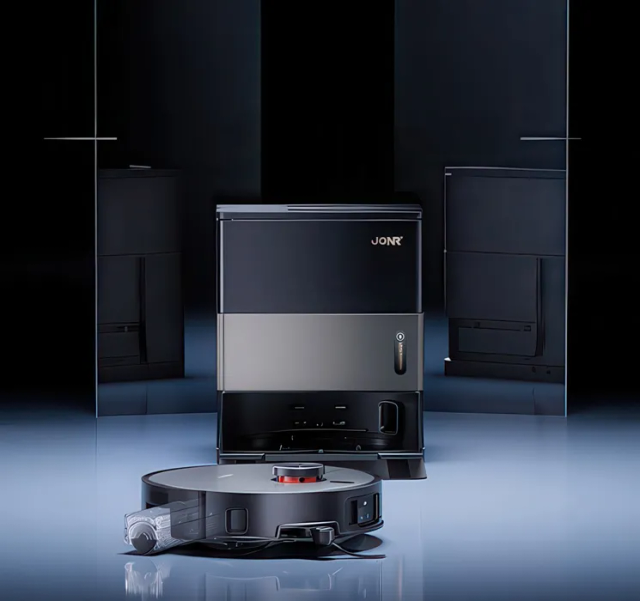
JONR X9 Pro Robot Vacuum & Mop
8.7/10 Excellent $599
Best for: Households that want floors maintained without a person doing it
Continuous fresh-water roller washing, 20,000Pa suction and all-in-one 167°F hot-water washing dock.
- Rated suction
- 20,000 Pa
- Runtime
- 150 min
- Noise
- 63 dB
- Navigation
- LiDAR
Best for
- You want continuous fresh-water roller mopping instead of dragging a damp cloth pad across rooms
- You need a fully automated thermal dock that washes at 167°F (75°C) and hot-air dries to prevent odors
- You want flagship-tier automation, LiDAR navigation, and dual flex arms at an accessible $599 price point
Not ideal if
- Your home has extensive high-pile carpet where dual-roller specialists like the Roborock S8 MaxV Ultra lead
- You have very low furniture with less than 4.33 inches of ground clearance
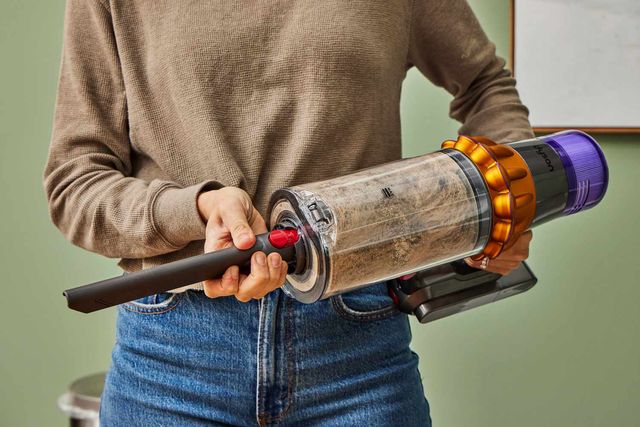
Dyson V15 Detect
9.3/10 Exceptional $649
Best for: Stairs, upholstery, cars and spot-cleaning
240 AW, a laser that reveals dust and a piezo sensor that counts it — still the benchmark cordless.
- Rated suction
- 240 AW
- Runtime
- 60 min
- Noise
- 78 dB
- Weight
- 3.1 kg
Best for
- Green laser makes invisible dust obvious on hard floors
- Auto-adjusts power based on particle count
- Anti-tangle hair screw tool for pet hair
Not ideal if
- Heavy at the wrist for stair work
- Runtime drops to ~8 min in Boost mode, per Consumer Reports measurement
The clearest way to think about it: a robot vacuum replaces the routine vacuuming you’d otherwise do every few days. A cordless stick replaces the targeted vacuuming — stairs, a spill, the car, under a couch cushion — that a robot can’t reach or can’t do on your schedule.
In our own testing, households running both report the robot handling the bulk of floor maintenance while the stick handles the remaining ~10-20% of jobs a robot structurally can’t do. Neither tool alone covered everything in our own use.
Robot Vacuum vs. Traditional Upright or Canister
We don’t currently score uprights or canisters, so we can’t make head-to-head claims the way we can between models we’ve actually reviewed. What we can say with confidence, based on the category’s basic mechanics:
- Corded uprights and canisters aren’t battery-constrained. A robot vacuum’s suction and runtime are inherently limited by what a battery can sustain; a corded machine has no equivalent ceiling.
- Deep, occasional cleaning still favors a traditional machine. If your pattern is a thorough weekly or biweekly clean rather than continuous light maintenance, a good upright or canister is generally still the more effective tool for that specific job.
- A robot’s advantage is frequency, not raw power. Cleaning lightly every day outperforms a powerful clean once a week for keeping floors consistently free of dust and hair — this is the core case for adding a robot, not necessarily replacing an existing upright with one.
So — Do You Actually Need Both?
For most homes, yes, though the exact mix depends on your layout:
- Mostly open hard floors, no stairs to clean: a robot vacuum alone may be sufficient for day-to-day maintenance, with a handheld or stick kept for spills and edges.
- Multi-level home with stairs, or significant upholstery/car cleaning needs: a robot handles the floors; you’ll still want a stick or handheld for everything else.
- Primarily deep carpet cleaning: check tested carpet scores carefully before assuming a robot alone will suffice — see our best robot vacuums for carpet guide, and consider keeping a dedicated carpet machine for periodic deep cleans regardless.
- Pet household: a robot with strong tested pet-hair pickup meaningfully reduces the daily hair-drift problem, but a stick vacuum with a proper anti-tangle head remains useful for upholstery and stairs — see our best robot vacuums for pet hair guide.
A robot vacuum is a genuine addition to how a home gets cleaned, not a strict replacement for every other vacuum in the house. Buy one to solve the specific problem it’s actually good at — automated, frequent floor maintenance — and keep realistic expectations about what still needs a human holding a handle.
Should I get a robot vacuum or a traditional vacuum?
Most households benefit from both, not a choice between them. A robot vacuum handles daily floor maintenance automatically; a traditional or cordless vacuum handles stairs, upholstery, cars and deep-cleaning that a robot physically cannot reach. In our own testing, no robot vacuum has replaced the need for a stick or upright entirely.
Can a robot vacuum replace a traditional vacuum completely?
Not for most homes. Robot vacuums in our lineup don't climb stairs, can't clean upholstery or cars, and generally can't reach as thoroughly into tight edges as a handheld tool can. They're excellent at frequent, automated maintenance of open floor area — a different job than deep or occasional cleaning.
Is a robot vacuum as powerful as a traditional vacuum?
It depends on the specific models being compared, not the category — in our lineup, several robot vacuums rate as high or higher on hardwood pickup than some traditional-style options, but a corded upright's motor is generally not battery-constrained the way a robot's is.
Do robot vacuums clean as well as traditional vacuums on carpet?
The robot vacuums we score range widely on carpet performance depending on brush design — some rival a good upright, others fall well short, especially on high-pile carpet. A dedicated deep-carpet upright or canister still generally out-cleans a robot on that specific job.
What can't a robot vacuum do that a traditional vacuum can?
Climb stairs, clean upholstery or car interiors, reach tight spaces around furniture legs the way a handheld nozzle can, or clean on demand mid-mess rather than on a schedule or manual trigger. These are the gaps a cordless stick or handheld is generally still needed for.
Related Buying Guides
We purchase every unit tested at retail with zero manufacturer influence. If you buy through a link on this page, we may earn an affiliate commission at no extra cost to you. How our testing is funded →