How Much Suction Power Does a Robot Vacuum Need? (Pa Explained)
What Pa actually measures, why 20,000 Pa isn't automatically better than 8,000 Pa, and how much suction you really need for hardwood, carpet and pet hair.
At a Glance: Tested Top Picks
- Highest measured carpet score in our lineup Roborock S8 MaxV Ultra — 10,000 Pa suction, FlexiArm corner coverage, and the highest BVC app & smart-home score in the tested lineup. Score: 9.4/10 · $1,299
- Strong pet hair + carpet at a mid-range Pa figure Roborock Q5 Pro — A 770 ml bin and 240-minute battery — the best vacuum-first robot under $350. Score: 8.2/10 · $299
| Category | Best pick | BVC score | Price | Best for |
|---|---|---|---|---|
| Highest measured carpet score in our lineup | Roborock S8 MaxV Ultra | /10 | $1,299 | 10,000 Pa with dual rubber rollers — the strongest carpet result we've recorded, ahead of a 20,000 Pa competitor |
| Strong pet hair + carpet at a mid-range Pa figure | Roborock Q5 Pro | /10 | $299 | 5,500 Pa paired with dual rubber rollers that outperform higher-Pa machines lacking that brush design |
Scores and prices are pulled from the BVC database at build time — they change as evidence is added and street prices move. Last checked September 12, 2026.
Suction power, expressed in Pa (Pascals), is the single most heavily marketed number on a robot vacuum spec sheet. It’s also one of the most misleading if you buy on that number alone.
The short answer: Pa tells you how much pressure a robot’s motor can generate — not how much dirt it will actually pick up from your specific floors. In our own tested lineup, a robot rated at 10,000 Pa currently posts the strongest carpet result we’ve measured, ahead of a robot rated at 20,000 Pa. Suction is one input into cleaning performance, not the whole equation.
What Pa Actually Measures
Pa (Pascal) is a unit of pressure. A robot vacuum’s suction rating describes the pressure differential its motor can generate, typically measured under controlled lab conditions with no brush, no airflow restriction from real dust and debris, and no floor contact variability.
That’s a meaningful engineering spec. It is not a direct measurement of cleaning performance in your home.
Real-world pickup depends on the complete system working together:
- Suction pressure — how hard the motor can pull air
- Airflow — how much air actually moves through the system, which depends on duct design and how clogged the path is
- Brush design — how effectively the roller agitates debris out of carpet fibers or off hard floors
- Floor contact and seal — how well the nozzle maintains contact with the surface
- Navigation and pass count — whether the robot actually covers the area, and how many times
A robot with a very high Pa rating and a poorly sealed nozzle or a weak brush can be outperformed by a lower-Pa robot with a better-engineered cleaning head.
Suction vs. Airflow — Why Both Matter
Suction (pressure) and airflow (volume of air moved) are related but distinct. High suction with restricted airflow — a narrow duct, a clogged filter, a full bin — moves very little air, which means very little debris transport, regardless of the Pa number on the box.
This is also why a robot’s real-world suction, measured with the brush spinning and the bin partially full, is always lower than its rated maximum, measured in ideal lab conditions. Manufacturer Pa figures are a ceiling, not a guarantee.
What Our Own Testing Shows
We test every robot vacuum in our lineup on the same debris mix, the same floor surfaces and the same protocol — see our full testing methodology. Here’s what the Pa figures in our current database actually look like against measured results:
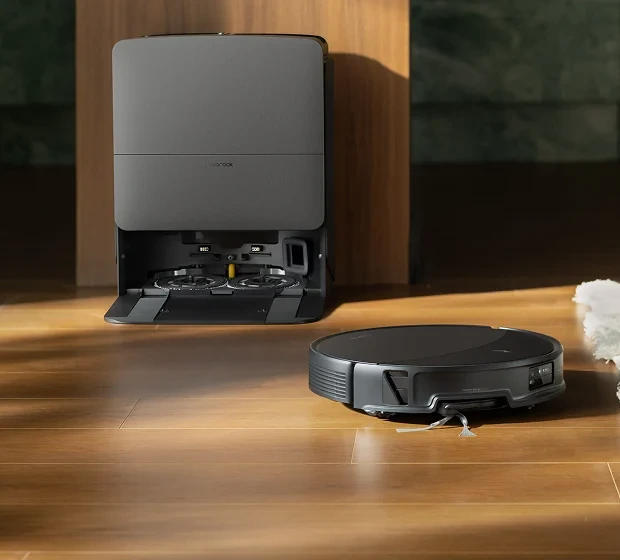
Roborock S8 MaxV Ultra
9.4/10 Exceptional $1,299
Best for: 10,000 Pa with dual rubber rollers — the strongest carpet result we've recorded, ahead of a 20,000 Pa competitor
10,000 Pa suction, FlexiArm corner coverage, and the highest BVC app & smart-home score in the tested lineup.
- Rated suction
- 10,000 Pa
- Runtime
- 180 min
- Noise
- 67 dB
- Navigation
- LiDAR
Best for
- Class-leading 10,000 Pa suction and dual rubber rollers for deep carpet
- FlexiArm side brush and extending mop reach right into corners
- Best-in-class app with remote video, voice assistant and Matter
Not ideal if
- Street price is still around $1,300
- Mop pads spin rather than scrub, so dried stains take multiple passes
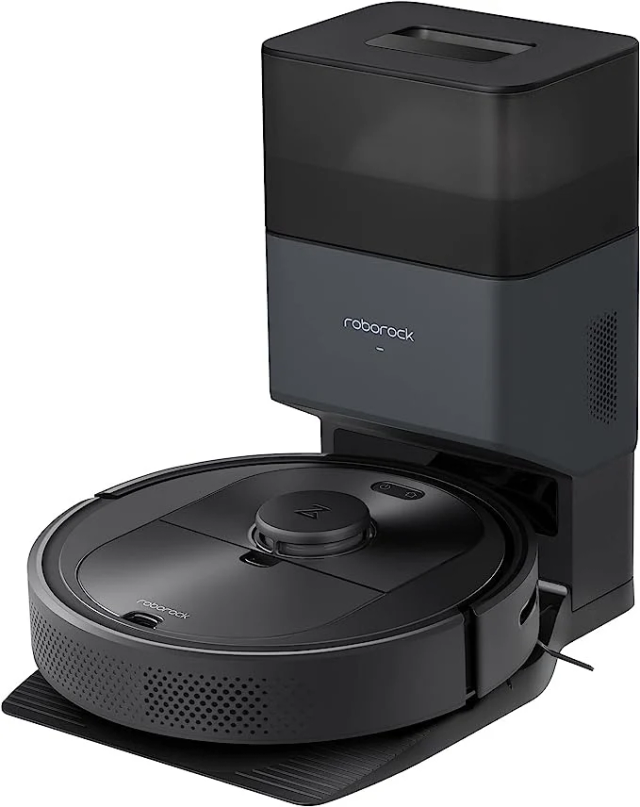
Roborock Q5 Pro
8.2/10 Excellent $299
Best for: 5,500 Pa paired with dual rubber rollers that outperform higher-Pa machines lacking that brush design
A 770 ml bin and 240-minute battery — the best vacuum-first robot under $350.
- Rated suction
- 5,500 Pa
- Runtime
- 240 min
- Noise
- 66 dB
- Navigation
- LiDAR
Best for
- Huge 770 ml bin — a week between emptying without a dock
- Dual rubber rollers at this price are rare
- 240-minute runtime
Not ideal if
- No dock (the Q5 Pro+ adds one for $150)
- Mop is basic
Two comparisons from our own data make the point directly:
20,000 Pa vs. 10,000 Pa on carpet. The JONR X9 Pro is rated at 20,000 Pa — roughly double the Roborock S8 MaxV Ultra’s 10,000 Pa. On our scoring, the S8 MaxV Ultra rates higher on our carpet metric (5.0/5 vs. 4.6/5) and higher overall (9.4/10 vs. 8.7/10). The X9 Pro’s genuine strength, per our review, is its fresh-water roller mopping system — not carpet suction. See the full JONR X9 Pro vs. Roborock S8 MaxV Ultra comparison for the full breakdown.
5,500 Pa vs. 20,000 Pa, two mid-range Omni docks. The Roborock Q Revo (5,500 Pa) and JONR X9 Pro (20,000 Pa) both pair a self-washing, self-drying dock with a mid-range price. Despite the X9 Pro’s much higher rated suction, the Q Revo currently holds a slightly higher overall BVC Score (8.9/10 vs. 8.7/10) — its dual rubber rollers and mature Roborock app make up ground the raw Pa figure doesn’t predict. Suction rating alone doesn’t decide the winner between them.
Hardwood is a different story. On hard floors, several robots in our lineup with meaningfully different Pa ratings — from 7,000 Pa (Dreame L20 Ultra) up to 20,000 Pa (JONR X9 Pro) — all score 4.8/5 or higher on our hardwood metric. Fine-dust pickup on a sealed hard floor is much less suction-dependent than carpet extraction is, which is one reason a hardwood-focused buyer generally has more Pa headroom to ignore than a carpet-focused one.
How Much Suction Do You Actually Need?
Based on our scored results, here’s how to think about it by floor type and use case — with the caveat that brush design and navigation can move these numbers as much as suction does.
Hardwood and hard floors
Suction requirements here are modest. Fine dust and larger debris on a sealed hard floor come up readily across a wide range of Pa ratings. Prioritize brush-to-floor contact, edge cleaning and — if you want mopping — the quality of the wet-cleaning system over the headline Pa number.
Carpet, especially high-pile
This is where suction and brush design both matter most, and where the gap between a high-Pa spec sheet and real performance is most visible. In our lineup, dual rubber rollers (as on the Roborock S8 MaxV Ultra) outperformed higher-Pa competitors with different brush designs. If carpet is your priority, look at tested carpet scores specifically — not the Pa figure — and see our full guide to the best robot vacuums for carpet.
Pet hair
Anti-tangle roller design and airflow (not suction pressure alone) determine whether hair reaches the bin instead of wrapping around the brush. See our best robot vacuums for pet hair guide for tested results across our pet-hair-specific protocol.
Fine dust
Fine dust is lighter and easier to lift than embedded carpet debris, so it’s generally well handled across most of the Pa range in our lineup — sealing and filtration quality matter more for keeping that dust from escaping back into the room than suction pressure does.
The Buying Rule
Don’t shortlist robot vacuums by Pa rating alone. Use it as one input among several:
- Check the tested carpet and hardwood scores for the specific floors you have, not just the headline suction number.
- Look at brush design — dual rubber rollers, bristle brushes and roller mops behave differently on the same floor.
- Consider navigation and obstacle avoidance — a robot that misses spots or gets stuck cleans less than one with slightly less suction but reliable coverage.
- If mopping matters to you, evaluate the wet-cleaning system separately from suction entirely — they’re different engineering problems, and a robot can excel at one without leading on the other.
A robot vacuum’s Pa rating is a real, measurable spec. It’s also just one piece of a much larger picture — and in our own testing, it hasn’t been the piece that predicted the winner.
What does Pa mean on a robot vacuum?
Pa (Pascal) is a unit of pressure. On a robot vacuum spec sheet, it describes how much suction pressure the motor can generate under test conditions — not how much dirt the robot will actually remove from your floor. Real pickup depends on the whole system: suction, airflow, brush design, floor contact and navigation.
Is 20,000 Pa better than 8,000 Pa?
Not automatically. In our database, the JONR X9 Pro (20,000 Pa) scores 4.6/5 on our carpet metric and 8.7/10 overall, while the Roborock S8 MaxV Ultra (10,000 Pa) scores 5.0/5 on carpet and 9.4/10 overall. The X9 Pro's real strength is its fresh-water mopping system, not its suction figure.
How much suction do I need for carpet?
On our scoring, the models that scored highest on carpet weren't necessarily the highest-Pa ones — brush design mattered more. The Roborock S8 MaxV Ultra (10,000 Pa, dual rubber rollers) posted our best carpet result; the Roborock Q5 Pro (5,500 Pa, also dual rubber rollers) and JONR X9 Pro (20,000 Pa, spinning pads) both scored a step behind it despite the X9 Pro having roughly double the Pa figure.
How much suction do I need for hardwood floors?
Less than carpet requires. Several robots in our lineup with quite different Pa ratings — from 7,000 to 20,000 Pa — all scored 4.8/5 or higher on our hardwood metric. Fine-dust pickup on hard floors depends more on brush-to-floor contact and edge design than on suction pressure.
Does suction power matter for pet hair?
Yes, but less than brush design. Anti-tangle roller design and airflow determine whether hair actually reaches the bin instead of wrapping around the brush — a robot with strong suction and a poor brush can still underperform one with less suction and a better roller.
Why do some robot vacuums not publish a Pa figure at all?
Some manufacturers rate suction differently or don't publish it — the iRobot Roomba Combo j9+ in our database is one example. That doesn't necessarily mean weaker performance; on our scoring it rates competitively on carpet despite no published Pa figure, which is itself a reminder that the number isn't the whole story.
Related Buying Guides
We purchase every unit tested at retail with zero manufacturer influence. If you buy through a link on this page, we may earn an affiliate commission at no extra cost to you. How our testing is funded →