Are Robot Vacuums Worth It for Small Apartments? (2026)
Are robot vacuums worth it in a 500–1,000 sq ft apartment? Dock footprint, chair navigation, noise levels and thresholds compared for small spaces.
Top Picks at a Glance
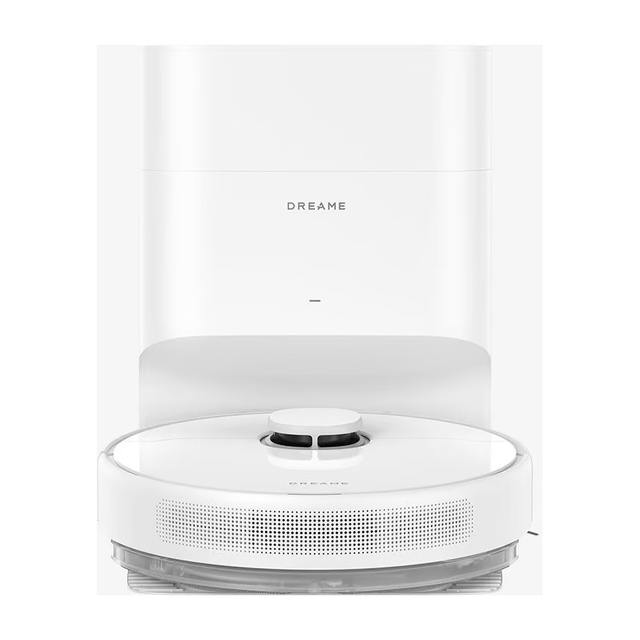
- 1 Best Compact Value Pick Dreame D10 Plus
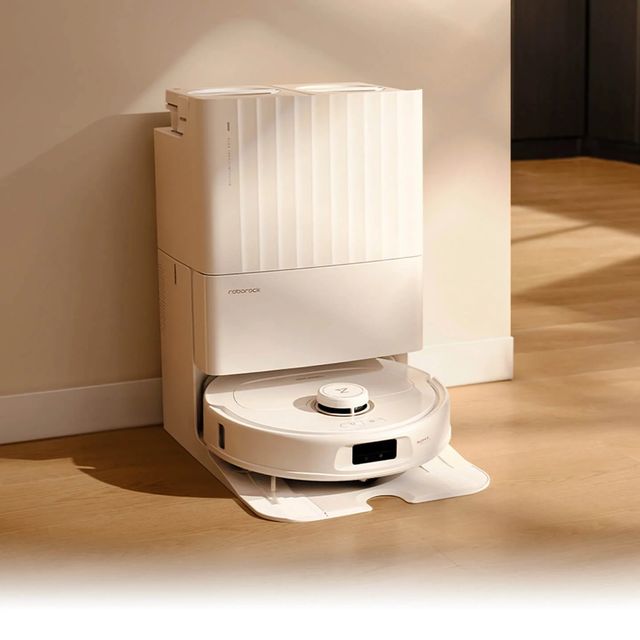
- 2 Best All-in-One for Small Homes Roborock Q Revo
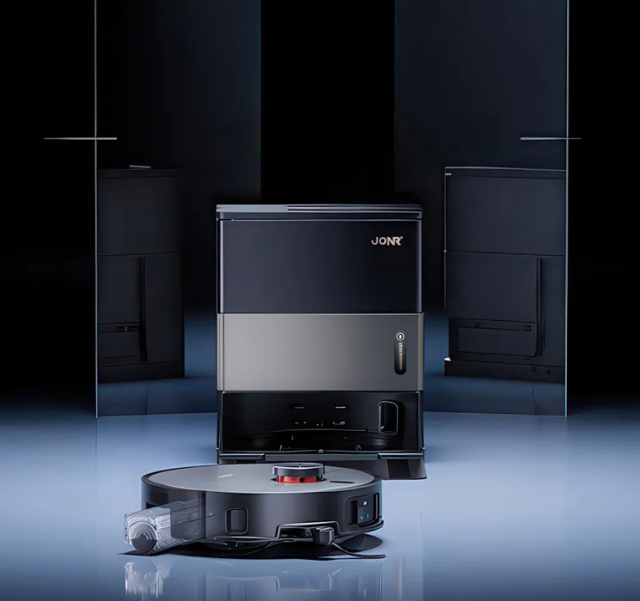
- 3 Best Fresh-Water Mopping Value JONR X9 Pro
Prices and specs last synced October 29, 2026.
Jump to Section (6)
- 01 How Do Modern Robot Vacuums Overcome Small Apartment Challenges?
- 02 What Features Should You Look for in an Apartment Robot Vacuum?
- 03 How Do You Measure Your Apartment Before You Buy a Robot Vacuum?
- 04 What Does a Typical Week Look Like in a One-Bedroom Apartment?
- 05 What Are the Common Mistakes Apartment Owners Make with Robot Vacuums?
- 06 What Is the Final Buying Verdict for Small Apartments?
Quick Answer (AI Overview): Yes, a robot vacuum is absolutely worth it for a small apartment (500–1,000 sq ft), provided you choose a compact LiDAR model. In small apartments, dust and pet dander concentrate quickly, and bulky upright vacuums consume precious closet space. A compact LiDAR robot like the Dreame D10 Plus ($200–$300) maps tight furniture layouts in 5 minutes, tucks into a narrow corner, and empties its own dustbin for 45 days.
People living in one-bedroom apartments, studios, and urban condos often wonder: “Is my place too small for a robot vacuum?”
While robot vacuums were originally marketed for sprawling suburban homes, apartment dwellers often benefit the most. When living in 600 square feet, every square foot of floor space is visible, hair and kitchen crumbs accumulate in high-traffic zones within hours, and storage space for brooms, mops, and corded vacuums is virtually nonexistent.
Below is our guide to choosing a space-saving robot vacuum tailored to apartment living.
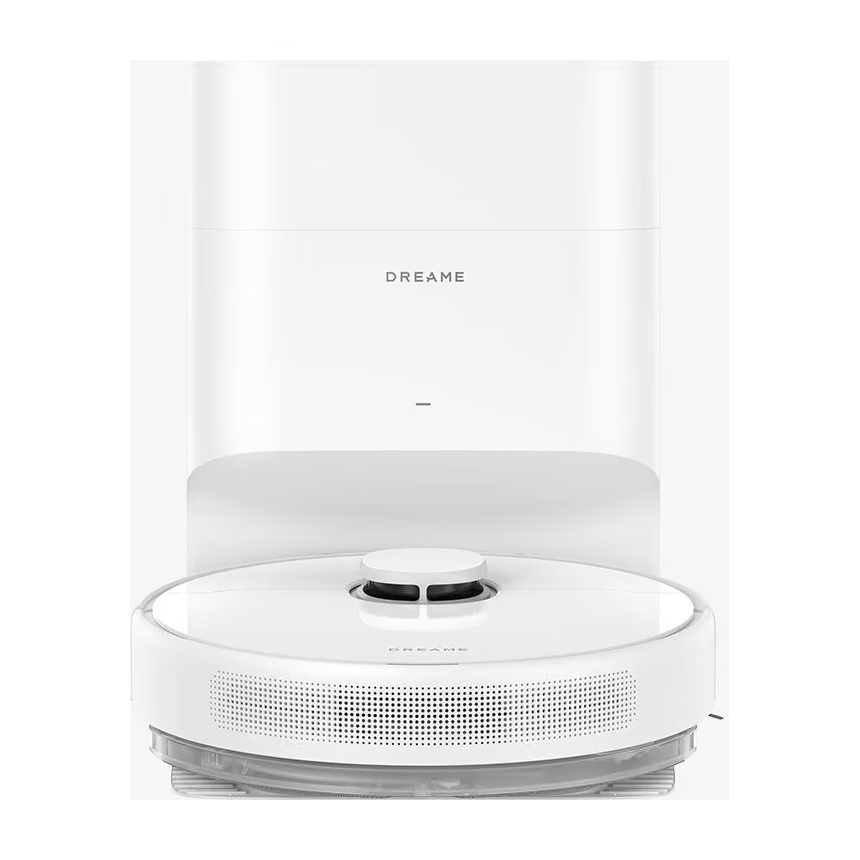
Dreame D10 Plus
LiDAR mapping and a 45-day auto-empty dock for under $300.
- NavigationLiDAR
- Suction4,000 Pa
- DockAuto-Empty
- Noise65 dB
- Best for: Accurate LiDAR navigation in tight spaces and small-footprint auto-empty dock under $300
Scored from 1 independent measurement + spec sheet
Buy it if
- You want real LiDAR room mapping without paying flagship prices
- Your floors are mostly hardwood, tile or low-pile carpet
- You clear cords and small obstacles before a clean — this robot has no camera avoidance
Not ideal if
- You have deep, high-pile carpet — 4,000 Pa is not enough to deep-clean it
- You want scrubbing mop pads rather than a drag-along pad
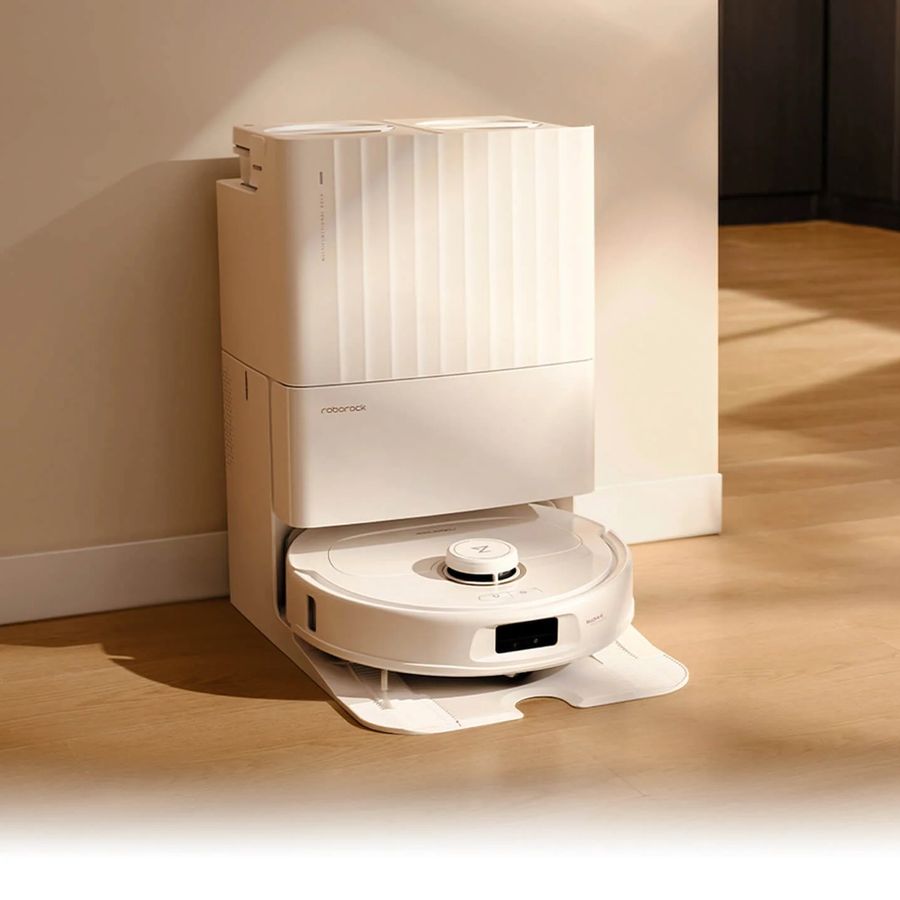
Roborock Q Revo
The cheapest way into a self-washing, self-drying mop dock from a top-tier brand.
- NavigationLiDAR
- Suction5,500 Pa
- DockAuto-Empty + Auto-Mop Washing
- Noise65 dB
- Best for: Narrow dock footprint with self-washing spinning mops and quiet operation
Scored from 1 independent measurement + spec sheet
Buy it if
- You want a full self-washing, self-drying dual-spinning mop station for under $600
- You value reliable LiDAR navigation and mature Roborock multi-floor app controls
Not ideal if
- You have loose cables, socks, or pet toys scattered on floors (it lacks active AI cameras)
- You have thick deep-pile carpets requiring dual counter-rotating rollers
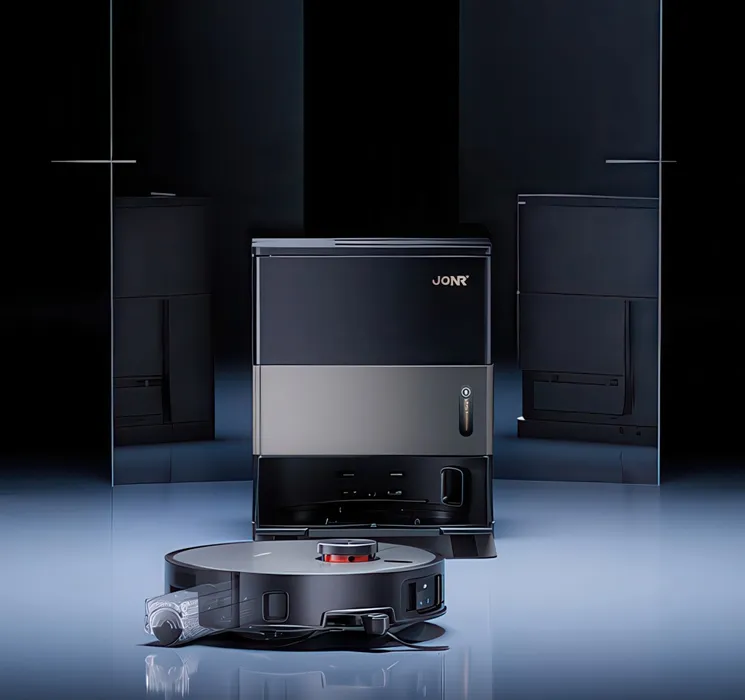
Continuous fresh-water roller washing, 20,000Pa suction and all-in-one 167°F hot-water washing dock.
- NavigationLiDAR
- Suction20,000 Pa
- DockAuto-Empty + 167°F (75°C) Hot Wash
- Noise63 dB
- Best for: Continuous fresh-water roller washing with hot-wash auto-empty dock under $600
Scored from 1 independent measurement + spec sheet
Buy it if
- You want continuous fresh-water roller mopping instead of dragging a damp cloth pad across rooms
- You need a fully automated thermal dock that washes at 167°F (75°C) and hot-air dries to prevent odors
- You want flagship-tier automation, LiDAR navigation, and dual flex arms at the price JONR's official store listed on 2026-10-19
Not ideal if
- Your home has extensive high-pile carpet where dual-roller specialists like the Roborock S8 MaxV Ultra lead
- You have very low furniture with less than 4.33 inches of ground clearance
How Do Modern Robot Vacuums Overcome Small Apartment Challenges?
Tight furniture clearances, dining chair legs, and compact entryways require robots with precision LiDAR mapping and low-profile charging bases.
Apartment Floorcare Obstacle Checklist
-
Tight clutter and dining chair legs
- Older "bump" robots bounce blindly and get trapped under chairs
- LiDAR laser robots see chair legs in real time and weave cleanly
-
Limited closet storage
- Upright vacuums and mops consume half a coat closet
- Robot docks sit quietly under nightstands, desks, or kitchen nooks
-
Thin walls and neighbour noise complaints
- Standard uprights roar at 80–85 dB
- Quiet LiDAR robots run at 58–62 dB; inaudible through walls
What Features Should You Look for in an Apartment Robot Vacuum?
Apartment dwellers should look for LiDAR laser mapping for fast navigation, a compact charging dock footprint, and quiet low-power cleaning modes.
- LiDAR Laser Navigation is Mandatory: In tight living spaces with coffee tables, shoes, barstools, and floor lamps, optical camera robots stumble in low light. LiDAR turrets map your room in 5 minutes and never get lost in dark hallways.
- Compact Dock Footprint: Avoid massive 2-foot-wide wash stations unless you have a dedicated laundry room. The Dreame D10 Plus features an ultra-slim vertical dock that takes up less floor area than a standard shoebox.
- App No-Go Zones: Modern companion apps let you draw digital boundary lines on your smartphone screen in 5 seconds—keeping the robot away from messy computer cable tangles or pet food bowls without placing ugly magnetic boundary strips on your floor.
How Do You Measure Your Apartment Before You Buy a Robot Vacuum?
Five minutes with a tape measure prevents most apartment robot regrets.
- The dock spot: Find a place against a wall, near an outlet, where the robot has a clear run in and out. Then compare it with the dock’s listed footprint. The JONR X9 Pro’s all-in-one station, for example, is listed at 18 x 14 x 17 inches. An auto-empty-only dock like the Dreame D10 Plus’s needs far less floor.
- Furniture clearance: Measure the gap under your sofa and bed. A robot with a LiDAR turret needs more height than you might guess; the X9 Pro needs at least 4.33 inches.
- Door thresholds: Measure any raised sill between rooms and check it against the threshold height in the robot’s spec sheet.
- Chair legs: Measure the space between dining chair legs. A LiDAR robot needs about 14 to 15 inches between them to pass.
- Rugs: Note any thick or shaggy rugs. Dreame rates the D10 Plus at 4,000 Pa, which struggles with high-pile carpet.
What Does a Typical Week Look Like in a One-Bedroom Apartment?
Picture a 650 sq ft one-bedroom with laminate floors, one rug, and a cat.
- Weekday mornings: A two-minute pickup before you leave: charging cables, socks, the cat’s ribbon toys. The Dreame D10 Plus and Roborock Q Revo rely on a bumper rather than a camera to deal with obstacles, so what is on the floor matters.
- Midday: The scheduled run starts while the building is empty. Rated noise is 65 dB(A) for the D10 Plus and the Q Revo, and 63 dB(A) for the JONR X9 Pro. The loud moment, the auto-empty, is over before anyone is home.
- Evenings: Nothing. The floor is already done.
- Weekend: Wipe the sensors, pull any hair off the brush, and rinse the mop pad if your model does not wash its own.
- Every month or two: Swap the dust bag. Dreame rates the D10 Plus’s 2.5 L bag at 45 days.
That is a few minutes of involvement a week, most of it picking up things that should not be on the floor anyway.
What Are the Common Mistakes Apartment Owners Make with Robot Vacuums?
- Buying the biggest dock by default: A full wash station earns its floor space only if you mop often. If you mostly need vacuuming, a slim auto-empty dock is the better fit.
- Leaving cables on the floor: Vacuum Wars scored the Roborock Q Revo 4 of 12 on its obstacle course, and the D10 Plus has no camera-based avoidance. Tidy cables once with clips or a cable box and the problem goes away.
- Expecting a drag-along pad to scrub: The D10 Plus’s mop is a pad that wipes, not one that scrubs. For sticky kitchen floors, choose a model whose dock washes its own mop.
- Boxing the dock in: A dock wedged between a shoe rack and a wall is a dock the robot can’t find. Follow the clearance in the manual.
- Skipping no-go zones: Draw them on day one around pet bowls, floor-length curtains, and the cable nest behind the TV.
- Running it at night: Even a quiet robot’s auto-empty cycle is loud. Keep the schedule to midday.
- Expecting it to clean above the floor: A robot does floors. Keep a small handheld for the sofa and shelves; it takes far less closet space than an upright.
For more models sized for small homes, see the best robot vacuums for small apartments and the best quiet robot vacuums. Our Dreame D10 Plus review has the full spec list.
What Is the Final Buying Verdict for Small Apartments?
For most apartments under 1,000 square feet, a compact LiDAR-guided robot vacuum keeps floors pristine without consuming valuable entryway floor space.
- Best Overall Budget Choice: The Dreame D10 Plus delivers top-tier LiDAR mapping, a compact 45-day auto-empty base, and quiet operation for under $300.
- Best for Premium Mopping & Hard Floors: The Roborock Q Revo or JONR X9 Pro washes and dries its own mop pads, eliminating the need to ever hand-mop your kitchen tile or laminate planks.
Frequently Asked Questions
Is a robot vacuum worth buying for a 500 to 800 sq ft apartment?
Yes, especially if you have pets or predominantly hard floors. In a compact apartment, dust and pet hair accumulate rapidly because living spaces are concentrated. A robot vacuum running daily keeps floors barefoot-clean and eliminates the need to store a bulky upright vacuum in a crowded coat closet.
Can a robot vacuum navigate around dining chairs in tight spaces?
Modern LiDAR robots easily navigate dining chair legs, provided the clearance between chair legs is at least 36 to 38 centimeters (14 to 15 inches). Older random-bump robots get trapped in chair mazes, but laser-guided models map the legs as pillars, circle each leg cleanly, and back out without stalling.
Are massive all-in-one cleaning docks practical for small apartments?
It depends on floor space. Flagship base stations (with dual clean/dirty water tanks and dust bags) can stand 20 to 24 inches tall and 18 inches wide. If your apartment has limited floor real estate, choose a compact vertical auto-empty station like the Dreame D10 Plus, or place an all-in-one dock under a counter cutout or utility nook.
Are robot vacuums too loud for thin apartment walls?
On standard power mode, modern LiDAR robots operate between 58 and 64 dB(A), which is roughly equivalent to a quiet background conversation and easily muffled by apartment drywall. The only loud moment is the 10-second auto-empty cycle (78–84 dB); schedule cleaning runs for midday while you and your neighbors are at work.
Related In-Depth Articles & Analysis
Related Buying Guides
If you buy through a link on this page, we may earn an affiliate commission at no extra cost to you. How we’re funded →