Cordless Stick or Corded Vacuum? How to Actually Decide
Cordless buys convenience, corded buys uninterrupted power. The honest trade-off, plus our top cordless picks if that's the right call for your home.
Top Picks at a Glance
- Best cordless overall #1 Top Pick
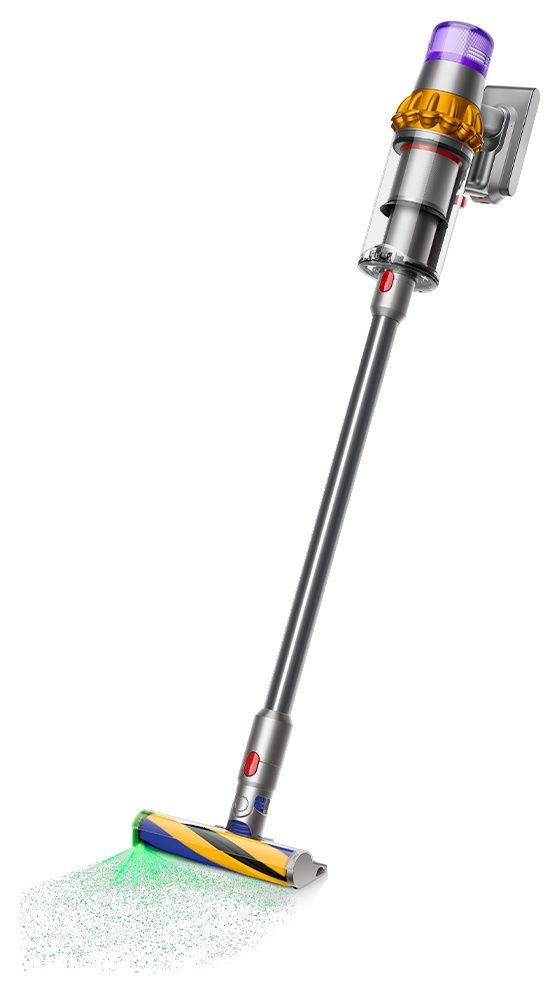 Dyson
DysonDyson V15 Detect
Best for: Highest tested cordless-stick performance for larger homes
240 AW Dust sensor - Best cordless value
- Longest cordless runtime
 Miele
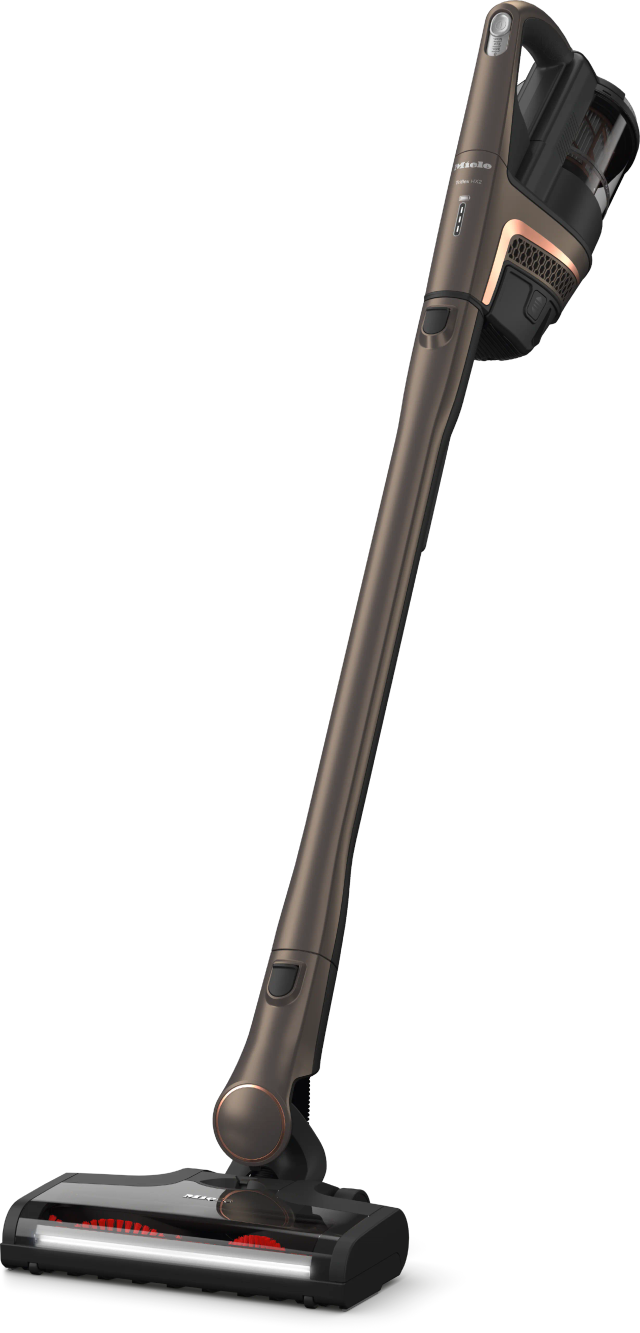
MieleMiele Triflex HX2 Pro
Best for: Covering a full home without a mid-clean recharge
Suction Manual
Prices and specs last synced September 12, 2026.
Jump to Section (5)
The cordless-vs-corded decision isn’t about which type is better — it’s about which trade-off fits your home. Cordless buys you convenience: grab it, clean, put it back, no outlet-hunting. Corded buys you uninterrupted power: it never runs out of runtime mid-clean. Neither wins outright, and the wrong choice for your home size is the single most common vacuum-buying mistake.
Dyson V15 Detect
Best for: Highest tested cordless-stick performance for larger homes
240 AW, a laser that reveals dust and a piezo sensor that counts it — still the benchmark cordless.
- Rated suction
- 240 AW
- Runtime
- 60 min
- Noise
- 78 dB
- Weight
- 3.1 kg
Best for
- Green laser makes invisible dust obvious on hard floors
- Auto-adjusts power based on particle count
- Anti-tangle hair screw tool for pet hair
Not ideal if
- Heavy at the wrist for stair work
- Runtime drops to ~8 min in Boost mode, per Consumer Reports measurement
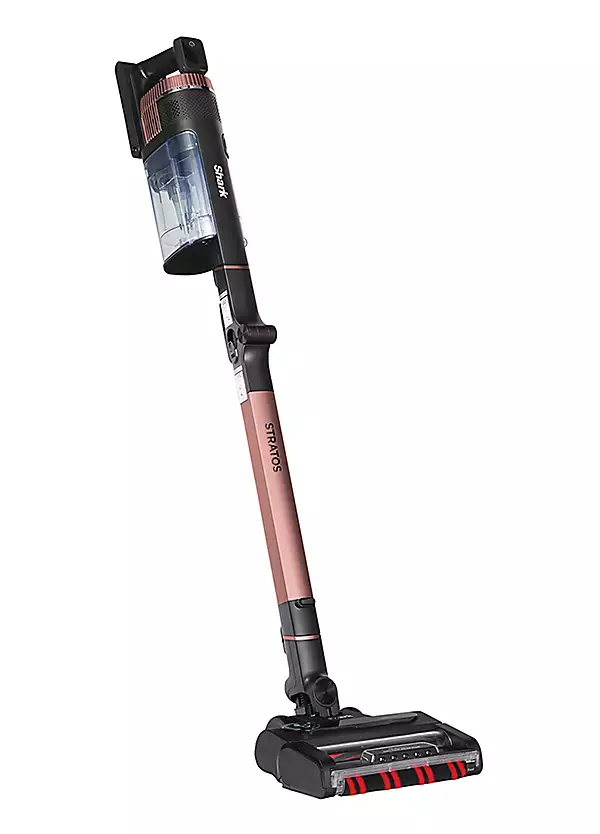
Shark Stratos Cordless (IZ862H)
Best for: Strong cleaning without flagship pricing
Clean Sense IQ auto-power, DuoClean PowerFins and an odour neutraliser for pet homes on a budget.
- Rated suction
- Not published
- Runtime
- 60 min
- Noise
- 79 dB
- Weight
- 4 kg
Best for
- Self-cleaning brushroll never needed scissors in a month of testing
- Odour cartridge really works in a litter-box room
- Bends flat to reach under furniture
Not ideal if
- Heavier than Dyson at 8.8 lb, per independent testing
- Battery is slower to charge (4 h)
Miele Triflex HX2 Pro
Best for: Covering a full home without a mid-clean recharge
Three-in-one configuration, two swappable batteries and a lifetime HEPA filter for allergy homes.
- Rated suction
- Not published
- Runtime
- 120 min
- Noise
- 76 dB
- Weight
- 3.7 kg
Best for
- Two batteries = 120 minutes total
- Power unit moves to the floor for upright-style comfort
- Sealed HEPA system, premium build materials
Not ideal if
- No dust sensing or auto mode
- Expensive for the feature set
The Real Trade-Off
Modern cordless sticks have closed much of the power gap with corded machines, but they haven’t eliminated the core trade-off: a battery is a battery, and it will eventually run out during a long enough clean. What’s changed is how much cleaning you can realistically get done before that happens.
Choose Cordless If…
- Your home is a single level or apartment. Less floor area means less risk of running out of charge mid-clean.
- You want to grab it and go. No cord to find an outlet for, no dragging a canister up stairs.
- You need it for stairs, furniture, or a car interior. Every cordless stick in our database converts to a handheld; a corded upright can’t.
- You’re willing to manage battery life. That means charging after use, not waiting until it’s empty, and accepting that headline runtime figures drop significantly at higher power settings.
On our scoring, the Dyson V15 Detect is the strongest overall cordless performer, while the Miele Triflex HX2 Pro posts the longest rated runtime in our database — the better pick if covering a larger space on one charge matters most to you. If budget is the deciding factor, the Shark Stratos Cordless delivers strong cleaning for roughly $300 less than the Dyson.
Choose Corded If…
- You have a large, multi-room home with continuous carpet. Sustained power over a long session, without a recharge break, wins here.
- You do infrequent deep cleans rather than quick daily pickups. A corded machine is built for a longer, more thorough single session, not grab-and-go convenience.
- You don’t want to think about battery health. No degrading battery to eventually replace, no charge-cycle management.
We haven’t yet lab-tested a traditional corded upright or canister vacuum in our database — every pick above is cordless — so if a corded machine is the right call for your home, treat this as a framework for the decision rather than a specific recommendation from our own testing.
The Middle Ground: Both
Many households solve this by owning both: a cordless stick for daily quick cleans and stairs, plus either a corded machine or a robot vacuum for scheduled deeper maintenance. If a robot is part of your setup, see our robot vs. traditional vacuum guide for what a robot can and can’t replace.
The Bottom Line
Cordless is the right call for most single-level and apartment homes where convenience matters more than sustained runtime. Corded still makes sense for larger homes with heavy carpet where a battery would realistically run out mid-clean. Match the trade-off to your actual home, not the spec sheet — see our complete vacuum cleaner buying guide for the full type-by-type breakdown.
Frequently Asked Questions
Should I get a cordless or corded vacuum?
It depends on your home size and cleaning habits, not which is objectively better. Cordless sticks win on convenience — no cord to find an outlet for, easy to grab for a quick clean, and they double as a handheld for stairs and furniture. Corded uprights and canisters win on uninterrupted runtime and typically sustained suction over a long session, which matters more in larger homes with continuous carpet.
How long do cordless vacuum batteries actually last per charge?
Less than the headline number in most real use. Manufacturers publish runtime on the lowest power setting; running at medium or max power for actual carpet cleaning can cut that by half or more. The Miele Triflex HX2 Pro posts the longest rated cordless runtime in our database, which matters if you're trying to cover a full home in one charge.
Is a cordless vacuum powerful enough to replace a corded one?
For most homes, yes — flagship cordless sticks in our database deliver suction comparable to mid-range corded machines. The main trade-off isn't peak power, it's sustained runtime: a corded vacuum never slows down or dies mid-clean, while even the best cordless stick eventually needs a recharge in a large or heavily carpeted home.
Do cordless vacuums need more maintenance than corded ones?
Cordless models add battery care to the maintenance list — most lithium-ion batteries degrade over several years of charge cycles, and replacement cost varies by brand. Corded vacuums avoid that specific issue but still need the same filter and brushroll maintenance as any other vacuum.
Are handheld vacuums worth it?
Handhelds are good for cars, couches and quick spills, but they don't replace a full-size vacuum. Many cordless sticks convert into a handheld, which avoids buying both.
Related In-Depth Articles & Analysis
Related Buying Guides

If you buy through a link on this page, we may earn an affiliate commission at no extra cost to you. How we’re funded →