Best Robot Vacuum Cleaners: How to Actually Choose One
Navigation, obstacle avoidance and dock automation matter more than suction Pa on a robot vacuum. How the current tiers break down and how to pick one.
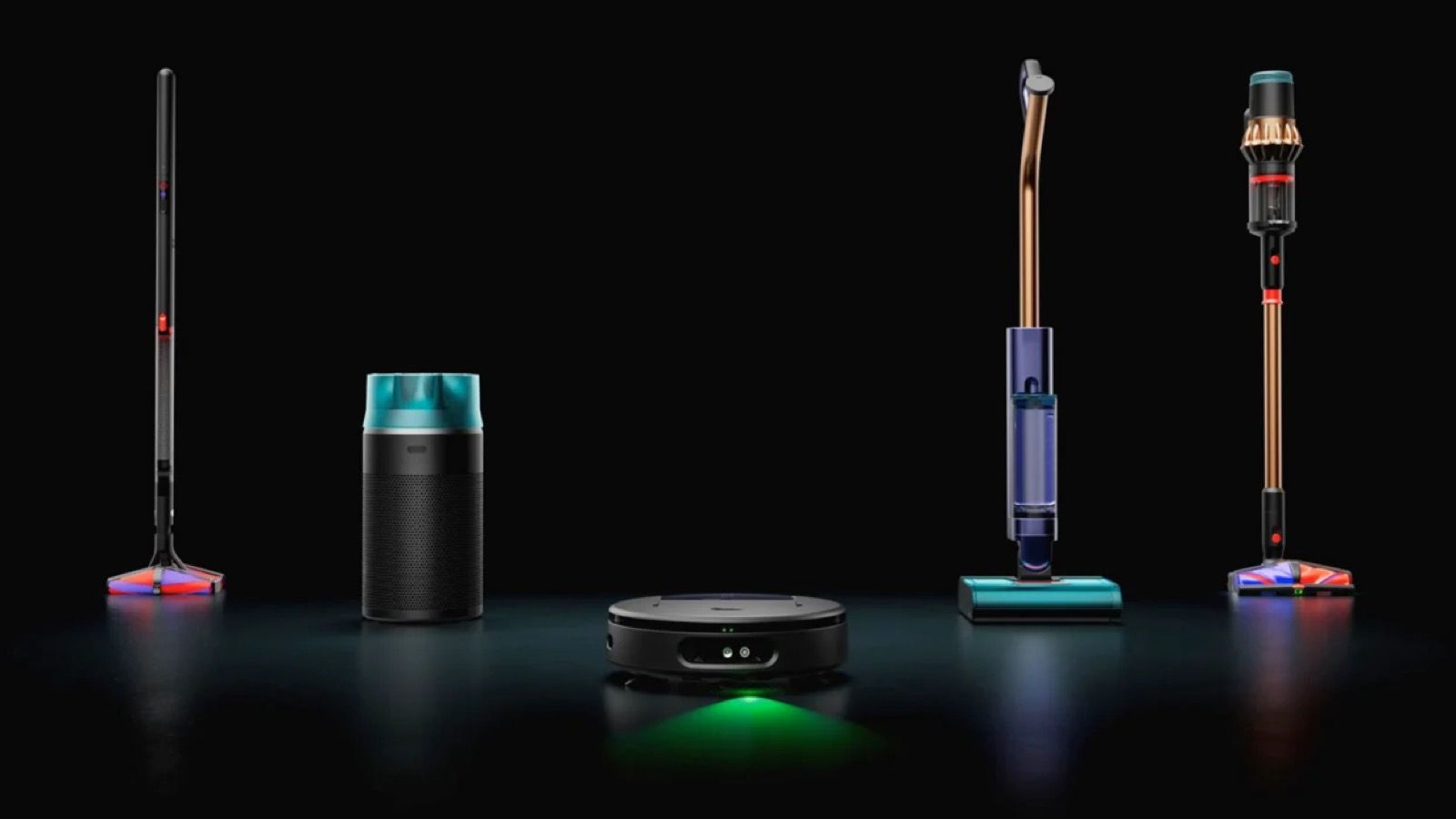
The best robot vacuum for your home isn’t the one with the highest suction number on the listing. It’s the one that maps your floor plan accurately, avoids the charging cable and the dog’s water bowl without you having to think about it, and does the tedious parts — emptying itself, rinsing its own mop — without your involvement. Suction gets the headline spec; navigation, obstacle handling, and dock automation are what decide whether the machine actually runs unattended the way it’s supposed to.
That distinction is the whole buying decision, and it’s what this guide is built around.
The Problem a Robot Vacuum Actually Solves
Manual vacuuming requires you to be home, available, and willing to do it on schedule
→ Autonomous navigation + a docking/charging system let a machine run the routine without a human present
→ Early robots (2000s) used simple bump-and-random movement with no real map
→ Current robots use LiDAR and/or camera mapping, remember the floor plan, and run scheduled, room-targeted cleanings
The trade-off hasn’t disappeared, it’s just narrowed. A robot vacuum still can’t match a full-size upright’s raw suction or its ability to climb stairs and work tight into every corner — what it buys back is consistency: the floor gets cleaned on schedule whether or not you remembered to do it yourself.
What Actually Determines Real-World Performance
Navigation: how the robot understands your home
This is the single spec that most determines whether a robot vacuum feels reliable or frustrating. LiDAR (laser-based distance sensing) builds an accurate floor map regardless of lighting and works identically day or night. vSLAM (camera-based mapping) reads visual landmarks to build its map and has improved substantially, but can still struggle in low light or with visually repetitive rooms. Current flagship models increasingly combine both — LiDAR for reliable mapping, cameras for object recognition on top of it — rather than relying on either alone.
Obstacle avoidance: what it does when it meets something on the floor
A dedicated obstacle-avoidance system (structured light, an RGB AI camera, or 3D time-of-flight sensing) lets the robot identify and route around real objects — cords, shoes, pet waste, low furniture legs — rather than blindly bumping into them or, worse, driving straight through something it shouldn’t. This is the spec that determines whether you need to tidy the floor before every run or can genuinely leave it running unattended.
Base station functionality: how much of the maintenance it removes
The dock is doing more work on current models than the robot itself in some respects. Look at what it actually automates: auto-emptying the dry-debris bin into a larger bagged reservoir, auto-washing the mop pad or roller with hot water after a mopping run, hot-air drying that roller afterward to prevent the mildew smell that plagued earlier wet-mopping robots, and auto-refilling the robot’s clean-water tank from a larger reservoir. A base model with none of this still needs a human to empty the bin and rinse the mop after most sessions — which, for many buyers, defeats a meaningful share of the point of owning one.
Suction power and mopping mechanism
Robot vacuums list suction in Pascals (Pa) rather than Air Watts — see our Pa vs Air Watts explainer for why that number alone doesn’t predict real pickup. For carpet, look for a brush roll design specifically built to avoid hair tangling, since robot vacuums run unattended and a jammed roller mid-session goes unnoticed until you check on it. For mopping, current designs range from a passive dragged pad (light touch-ups only) to spinning or vibrating mop heads with real downward pressure, which meaningfully outperform a dragged pad on actual grime — closer to the scrubbing action described in our wet and dry vacuum cleaner guide.
Smart home and app integration
Room-specific scheduling, no-go zones, and multi-level floor maps are now standard on mid-tier and above. Matter, Apple Home, Amazon Alexa, and Google Home integration vary by model and matter mainly if you already run a smart-home ecosystem and want the robot inside it rather than in its own separate app.
How the Current Field Breaks Down
Premium flagship. This tier combines LiDAR with AI object recognition trained on a wide range of household obstacles, a fully-automated dock (empty, wash, dry, refill), and increasingly, mechanical systems to handle furniture and threshold obstacles that used to stall every robot vacuum — some current flagships use leg-like lift mechanisms specifically to climb over raised thresholds between rooms that would have stopped a wheeled-only design. Expect the strongest all-around obstacle handling and the least hands-on maintenance, at the highest price point in the category.
Upper-mid, near-flagship. A meaningful and growing tier: LiDAR navigation, self-empty and self-wash docks, and solid obstacle avoidance at a noticeably lower price than the true flagships, with the main trade-offs being a smaller onboard dustbin, slightly reduced threshold-climbing height, or marginally less refined app polish. Through 2026, this tier has increasingly delivered features that were flagship-exclusive just a year or two earlier, which makes it the strongest value point for most households rather than a compromise pick.
Value and budget. Reliable dry-suction cleaning with basic navigation (often vSLAM rather than LiDAR) and either a simpler dock or no automated dock at all. A reasonable entry point for a smaller, less cluttered home, or as a second unit for a single floor, but expect more manual bin-emptying and mop-rinsing, and less confident obstacle avoidance around genuine floor clutter.
| Tier | What you’re paying for | What you’re giving up if you go cheaper |
|---|---|---|
| Premium flagship | LiDAR + AI obstacle recognition, fully automated dock, advanced threshold/obstacle handling | Price, and dock footprint (these docks are large) |
| Upper-mid | LiDAR, self-empty/self-wash dock, strong obstacle avoidance at a lower price | Onboard bin size, peak threshold-climbing height, some app polish |
| Value/budget | Reliable core dry cleaning, basic mapping | Automated dock features, refined obstacle avoidance, mopping quality |
Matching a Tier to Your Home
PROBLEM: Choosing a robot vacuum tier
→ Small, low-clutter apartment, hard floors → Value/budget tier covers this comfortably
→ Mixed carpet and hard floor, moderate clutter, want less manual maintenance → Upper-mid tier; self-empty/self-wash earns its price here
→ Large multi-level home, pets, raised thresholds between rooms, want near-zero hands-on upkeep → Premium flagship
→ Home is majority carpet with little hard flooring → Weight mopping features less; prioritize suction and brush design over dock automation
Where a Robot Vacuum Still Loses to a Full-Size Vacuum
Two limitations are structural, not just “this generation hasn’t solved it yet.” Robot vacuums generally cannot climb stairs, so a multi-level home needs either one unit per level or a full-size vacuum to cover stairs regardless of how advanced the robot is. And a round or D-shaped chassis, however well it maps a room, physically cannot reach every corner as completely as a human pushing an upright or stick vacuum into a tight edge — obstacle avoidance has improved dramatically, but chassis geometry hasn’t changed in a way that fully closes this gap.
Most owners land on the same setup regardless of budget: the robot handles daily maintenance across the main floor, and a stick or upright vacuum handles stairs, deep periodic cleans, and true edge work.
The Decision, Simplified
- Buy premium flagship if you have a large, multi-room home with pets, clutter, and raised thresholds, and want the closest thing to zero-touch operation.
- Buy upper-mid if you want LiDAR navigation and a self-cleaning dock without flagship pricing — this is the strongest value tier right now for most households.
- Buy value/budget if your space is small and relatively tidy, or you’re adding a second unit for one specific floor.
- Keep a stick or upright vacuum too for stairs, tight edges, and periodic deep cleans the robot’s chassis geometry can’t fully reach.
The spec sheet will always lead with a Pa number. Navigation reliability, obstacle handling, and how much of the maintenance the dock actually removes are what decide whether the robot earns its place running unattended, or ends up parked in a closet after the first jammed roller goes unnoticed for a week.
Is LiDAR navigation worth paying more for over camera-based navigation?
For most homes, yes. LiDAR builds an accurate map using laser distance sensing regardless of lighting conditions, so it works as well at night as during the day and doesn't get confused by dark furniture or low-contrast floors the way camera-based vSLAM can. Camera-based navigation has closed much of the gap and adds object-recognition value LiDAR alone doesn't provide, which is why current flagships increasingly combine both rather than picking one.
Do I need a self-empty, self-wash dock?
It depends on how hands-off you want the machine to be. A self-empty dock removes the weekly dustbin-emptying chore; a self-wash dock additionally rinses the mop pads or roller after every mopping run, which matters more for households running the mop function daily and less for those using it occasionally on an already-tidy floor.
Will a robot vacuum work if I have a lot of cords, shoes, and pet toys on the floor?
Current mid-to-premium models use AI object recognition to identify and route around common household obstacles, which has meaningfully reduced the 'got stuck' failures that plagued earlier generations. It isn't perfect, and a genuinely cluttered floor will still slow a session down or cause a partial miss in that area, but it no longer requires clearing the floor before every run the way early bump-navigation robots did.
Can a robot vacuum replace a full-size vacuum entirely?
For daily maintenance on an already-reasonably-tidy home, yes for most people. It's a poor substitute for periodic deep cleaning — edge-to-edge on heavily soiled carpet, stairs (robots generally can't climb them), and tight corners a round or D-shaped chassis can't fully reach. Most owners keep a stick or upright vacuum for those jobs and let the robot handle the in-between days.
We purchase every unit tested at retail with zero manufacturer influence. If you buy through a link on this page, we may earn an affiliate commission at no extra cost to you. How our testing is funded →