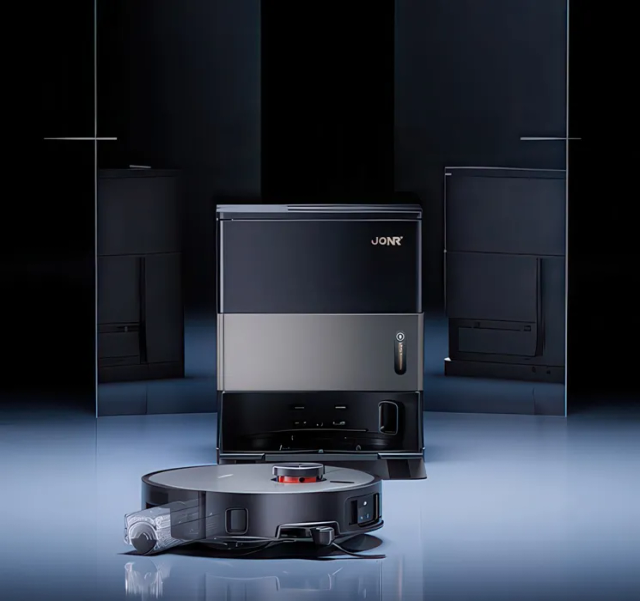
How Loud Is a Vacuum Cleaner? Decibels Explained
Most vacuums are rated 55 to 80 dB(A). What the number means, why +10 dB sounds twice as loud, and why robot and stick ratings can't be compared directly.
Jump to Section (6)
- 01 What Does a Vacuum Decibel dB(A) Rating Actually Measure?
- 02 How Loud Are Vacuum Cleaners Across Different Categories?
- 03 Why Do Two Vacuums with Similar dB Ratings Sound Completely Different?
- 04 Does the Manufacturer’s Rated dB Figure Match Real-World Home Noise?
- 05 What Decibel Level Is Too Loud for Hearing Safety and Pets?
- 06 What Quiet Vacuums Should You Buy If Noise Matters Most?
Quick answer: Vacuum cleaners are typically rated between about 55 and 80 dB(A). Robot vacuums sit at the quiet end, cordless sticks and wet-dry machines at the loud end. A 10 dB difference sounds roughly twice as loud, so the gap between a 55 dB(A) robot and a 78 dB(A) stick is far bigger than the numbers suggest.
What Does a Vacuum Decibel dB(A) Rating Actually Measure?
A dB(A) rating is the sound level a manufacturer reports for the machine running, weighted to match how human hearing responds. It is not an independent measurement unless a third party says so, and brands choose their own test conditions.
- The “A” weighting de-emphasises very low and very high frequencies that people hear poorly, so the number tracks perceived loudness.
- The scale is logarithmic. +3 dB doubles the sound energy, and +10 dB is generally perceived as about twice as loud.
- Conditions are not standardised across brands. Power mode, measuring distance and floor type can differ, which is why a spec sheet number is a guide rather than a guarantee.
How Loud Are Vacuum Cleaners Across Different Categories?
Using manufacturer-rated figures from our product database, robot vacuums are the quietest category, and stick and wet-dry machines are the loudest.
| Machine | Type | Rated noise | Source |
|---|---|---|---|
| Numatic Henry HVR160 | Corded canister | 47 dB(A) | Manufacturer |
| Eufy 11S Max | Robot | 55 dB(A) | Manufacturer |
| JONR T5 Lite | Robot | 60 dB(A) | Manufacturer |
| Roborock Q Revo Master | Robot + mop dock | 63 dB(A) | Manufacturer |
| JONR VC08 Pro | Cordless stick | 68 dB(A) | Manufacturer |
| Dyson V12 Slim | Cordless stick | 76 dB(A) | Manufacturer |
| Dyson V15 Detect | Cordless stick | 78 dB(A) | Manufacturer |
| Shark Stratos | Cordless stick | 79 dB(A) | Manufacturer |
| Bissell CrossWave OmniForce | Wet-dry | 80 dB(A) | Manufacturer |
Some products in our database have no published noise rating, so they are left out rather than estimated.
Why Do Two Vacuums with Similar dB Ratings Sound Completely Different?
Pitch matters as much as level. A high-pitched whine from a fast motor can feel more intrusive than a lower hum at the same dB(A), and the rating does not capture that. Floor type, room size and brush roll noise also change what you hear.
Does the Manufacturer’s Rated dB Figure Match Real-World Home Noise?
Not necessarily. Our database has one independent check: Reviewed measured the Tineco Floor One S7 Pro at 77+ dBA at full power, against a manufacturer rating of 76 dB(A). That is a gap of about 1 dB, and a single data point is not enough to say how far other ratings are off. Source: Reviewed.
What Decibel Level Is Too Loud for Hearing Safety and Pets?
For a household, the practical thresholds are about use, not damage:
| Level | Roughly like | Practical effect |
|---|---|---|
| Up to 60 dB(A) | Normal conversation | You can talk and take calls nearby |
| 60 to 70 dB(A) | A busy office | Conversation is raised, TV needs volume |
| 70 to 80 dB(A) | Loud, constant background noise | Conversation is difficult in the same room |
| 85 dB(A) and above | Louder than any rating in our database | NIOSH recommended limit for eight-hour average exposure |
What Quiet Vacuums Should You Buy If Noise Matters Most?
Choose by use case, then confirm the rating in the product’s spec sheet:
- Cleaning while someone sleeps or works from home: a robot vacuum scheduled out of hours, rated in the 55 to 65 dB(A) range.
- A small apartment with thin walls: a robot with a self-empty dock, but check that the dock’s emptying burst is not the loud part. Brands rarely publish that figure.
- Deep cleaning carpet: accept stick-vacuum noise and clean at set times rather than hunting for a quiet one. Quiet and maximum suction trade against each other.
Related reading: our quiet robot vacuum guide and robot vs traditional vacuum comparison.
Frequently Asked Questions
How many decibels is a normal vacuum cleaner?
Manufacturer ratings in our product database run from about 47 dB(A) for a corded canister to about 82 dB(A) for a cordless stick. Robot vacuums are usually rated in the 55 to 68 dB(A) range, and most cordless sticks and wet-dry machines in the 70s and low 80s.
Is 60 dB quiet for a vacuum?
60 dB(A) is about the level of normal conversation, which makes it quiet for a vacuum. Only the quietest robots are rated that low. The figure usually describes a standard cleaning mode, so expect more noise at maximum suction.
Does a 10 dB difference matter?
Yes. Every 10 dB increase is generally heard as roughly twice as loud, and every 3 dB doubles the sound energy. A 78 dB stick and a 63 dB robot differ by 15 dB, which is a very noticeable gap.
Can I compare a robot vacuum's dB rating with a stick vacuum's?
Not safely. Brands choose their own test conditions (power mode, distance, floor type), and robots are usually rated in a standard mode while sticks are often rated at a higher setting. Compare ratings within a category and treat cross-category gaps as a rough guide.
Are vacuum noise levels harmful to hearing?
Typical vacuum ratings of 70 to 80 dB(A) sit below the 85 dB(A) eight-hour average that the US NIOSH recommends as an exposure limit, but the margin is not large at the top of that range. Long or repeated sessions with the loudest machines are where ear protection starts to make sense.
Related In-Depth Articles & Analysis
Related Buying Guides
If you buy through a link on this page, we may earn an affiliate commission at no extra cost to you. How we’re funded →